Covid-19 and Scuba Diving
Over recent years, the COVID-19 virus pandemic has had a significant impact on daily life across the world, changing the way we work, travel, socialise, and participate in recreational activities — including scuba diving.
COVID-19 primarily spreads in two ways. The first is through respiratory transmission, where small droplets released when an infected person coughs, sneezes, speaks, or breathes can be inhaled by others. The second is through contact transmission, where the virus is transferred from contaminated surfaces to the hands and then into the body through the mouth, nose, or eyes.
Information on COVID-19 and Scuba Diving
As a social and equipment-based activity, scuba diving was naturally affected by the pandemic. However, as scientific understanding of the virus and its transmission improved, the diving industry was able to adapt by implementing practical safety measures designed to reduce risk while allowing divers to continue exploring the underwater world responsibly.
Today, dive centres and training organisations follow a range of hygiene and operational protocols, including enhanced equipment sanitation, improved cleaning procedures, health screenings, and social distancing measures where appropriate. These simple but effective practices help create a safer environment for both divers and dive professionals.
While COVID-19 changed many aspects of the dive industry, it also highlighted the importance of health awareness, personal responsibility, and community cooperation — values that remain important both above and below the surface.
Good Hand Hygiene in Scuba Diving
Maintaining good hand hygiene is an important part of reducing the risk of illness transmission within scuba diving environments. Divers should wash their hands thoroughly with soap and water for at least 20 seconds or use an alcohol-based hand sanitiser containing a minimum of 60% alcohol before and after handling dive equipment.
When assembling or preparing scuba equipment, divers should also try to minimise unnecessary contact with other people’s gear where possible. This helps reduce the potential transfer of contaminants between equipment and individuals.
In addition, traditional pre-dive checks involving breathing from an alternate air source are no longer widely recommended unless the regulator can be properly disinfected immediately afterwards. Instead, divers can simply test the alternate air source by pressing the purge button to confirm correct airflow and functionality without direct mouth contact.
Simple hygiene practices such as these help create a safer and more responsible diving environment for both divers and dive professionals.
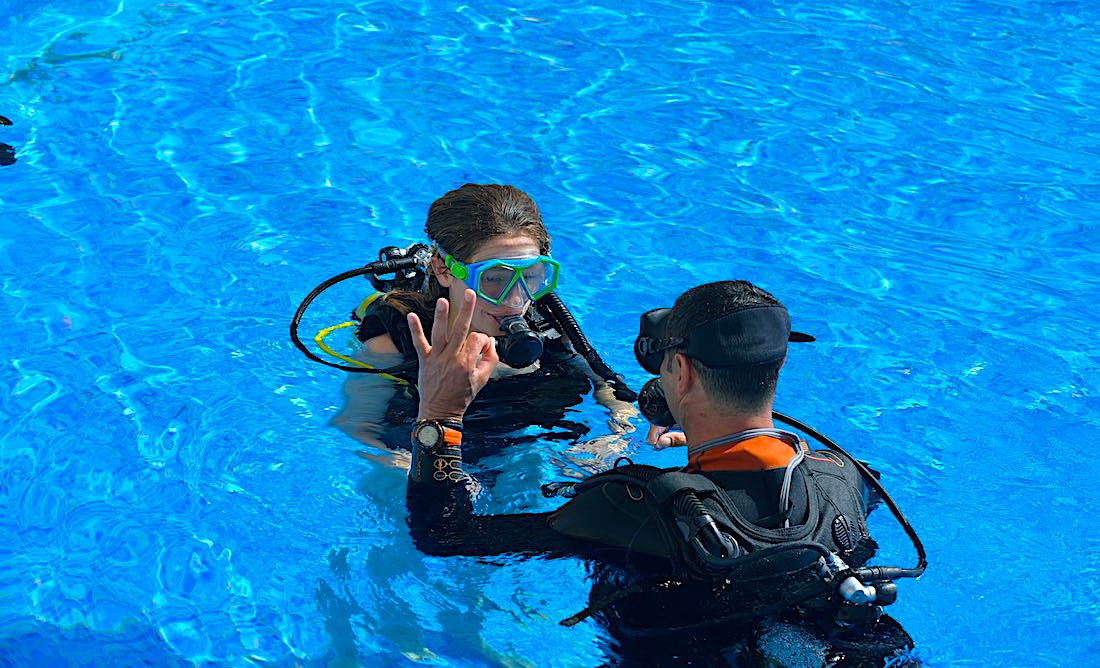
Maintain Clean Hands
Prior to the COVID-19 pandemic, it was common for dive instructors to congratulate students with handshakes, high-fives, or fist bumps after completing skills or dives successfully. While these gestures were once a normal part of dive culture, the industry has since adapted by encouraging non-contact alternatives such as hand signals, underwater gestures, and verbal encouragement at the surface.
Reducing unnecessary physical contact helps minimise the risk of disease transmission and contributes to a safer environment for both divers and dive professionals.
Maintain a Distance From Other Divers
When divers are fully equipped underwater with masks and regulators in place, the risk of transmission is significantly reduced. However, maintaining appropriate spacing between divers remains good practice both underwater and at the surface.
During surface-based skill practice, divers should aim to maintain approximately 1.5 metres of distance from one another where possible. Even at this distance, divers remain within safe reach should assistance be required.
Environmental conditions should also be considered, particularly wind direction at the surface. During skills involving forceful exhalation, such as snorkel clearing, divers should position themselves to avoid exhaled air or water droplets travelling towards others.
Simple measures such as maintaining distance and limiting direct contact help support a safer and more responsible diving environment for everyone involved.
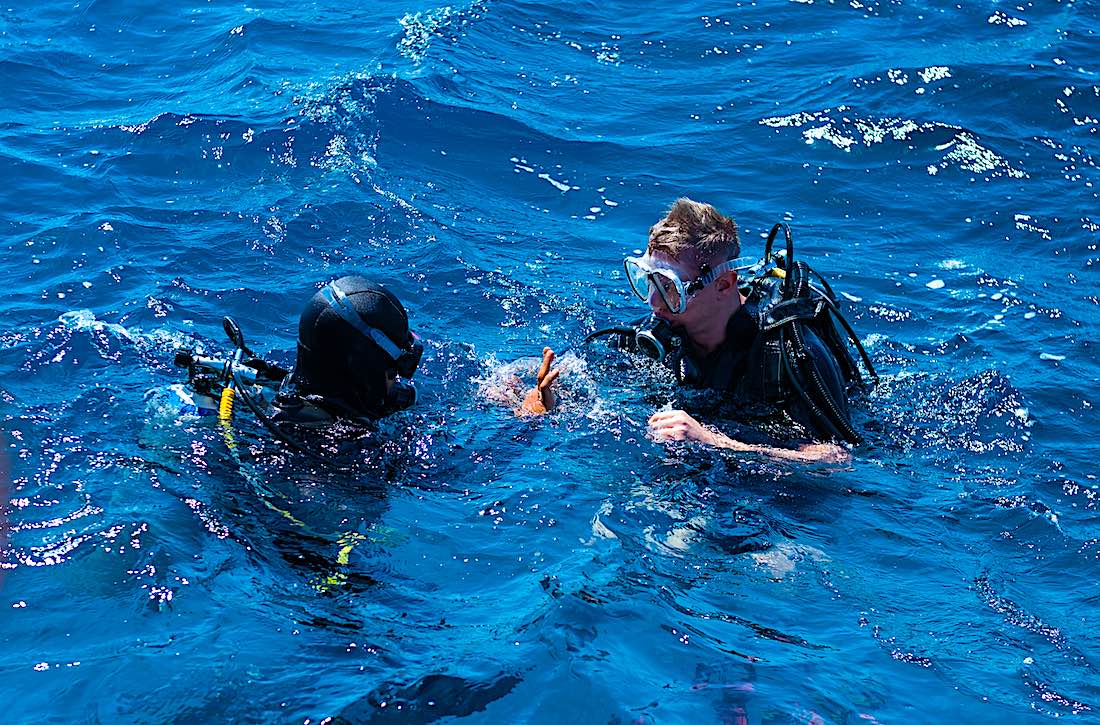
Maintain a Safe Distance
After completing a dive and returning to the surface, divers should remain mindful of basic hygiene practices. Actions such as clearing mucus from the nose or mouth or spitting into the water near other divers should be avoided where possible, as these behaviours can increase the risk of disease transmission in close-contact environments.
Whenever practical, divers are encouraged to keep their mask in place and regulator in their mouth until they have fully exited the water and are at a comfortable distance from others.
Underwater, social distancing is generally less critical because each diver is breathing from their own regulator while wearing an individual mask. In fact, maintaining buddy contact is important for safety, communication, buoyancy control, and effective buddy contact.
However, despite the reduced transmission risk underwater, divers should still aim to minimise unnecessary physical contact whenever possible to help maintain a safe and hygienic diving environment for everyone involved.
Wearing a Face Mask During Scuba Diving Activities
In common areas, such as classrooms, dive center reception areas, or equipment rooms, wear a face mask as much as possible. This is important because people can spread the virus even before they know they are infected. Ideally, you should organize diving activities outdoors as much as possible. It is generally considered that the risk of disease transmission is lower when outside compared to being inside.
Flexible Learning and eLearning Options
The majority of our knowledge development sessions are conducted outdoors on the restaurant terrace, creating a relaxed and open learning environment while minimising time spent in traditional classroom settings.
For those wanting to maximise their time in the water and make the most of their scuba diving experience on Koh Tao, we highly recommend choosing the eLearning option. By completing the theory components before arrival, students are able to spend more time focusing on practical training and enjoying the diving elements of the course.
Our eLearning program provides full access to all required course materials at no additional cost, allowing students to learn at their own pace before beginning their in-water training.
We strongly encourage all students to complete as much eLearning as possible prior to arrival, as it helps create a smoother learning experience and allows more time for diving, skill development, and ocean exploration once on the island.
Disinfecting Scuba Diving Equipment
Proper cleaning and disinfection of scuba diving equipment is an essential part of maintaining both diver safety and equipment longevity. Items such as regulators, masks, BCDs, snorkels, and other frequently used gear should be thoroughly cleaned and disinfected after each use and before being stored.
Disinfectants should always be used according to the manufacturer’s recommended dilution and contact times to ensure they remain both effective and safe for the equipment materials.
For effective disinfection, equipment should be fully immersed in the cleaning solution rather than simply sprayed externally. Once disinfected, all gear should be rinsed thoroughly with fresh water to remove any remaining chemical residue before being left to dry completely and stored appropriately for future use.
Maintaining proper equipment hygiene not only helps reduce the risk of disease transmission but also contributes to better equipment performance, reliability, and long-term durability.
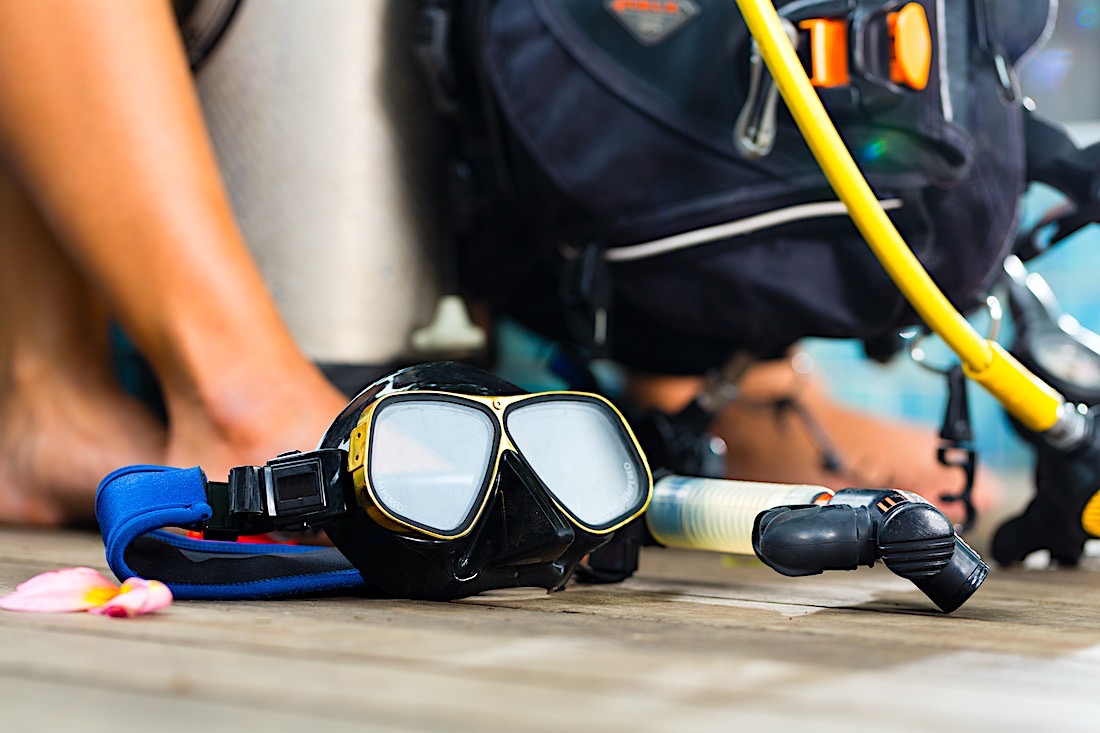
Preparing the Mask for Scuba Diving
Before entering the water, dive masks are typically treated with an anti-fog solution or mild soapy mixture to help prevent fogging during the dive. Masks can then be rinsed using the clean fresh water available on the dive boat before being fitted securely onto the face.
Once prepared, it is recommended that the mask remains on throughout the entire surface period before descent and ideally stays in place until the diver has safely returned to the boat after the dive. This helps minimise unnecessary contact with the face and reduces the potential risk of contamination.
Historically, many divers used saliva as a simple anti-fog solution. However, modern hygiene practices now encourage the use of dedicated anti-fog products or approved cleaning solutions instead, helping to maintain a safer and more hygienic diving environment for everyone onboard.
The Buddy System in Scuba Diving
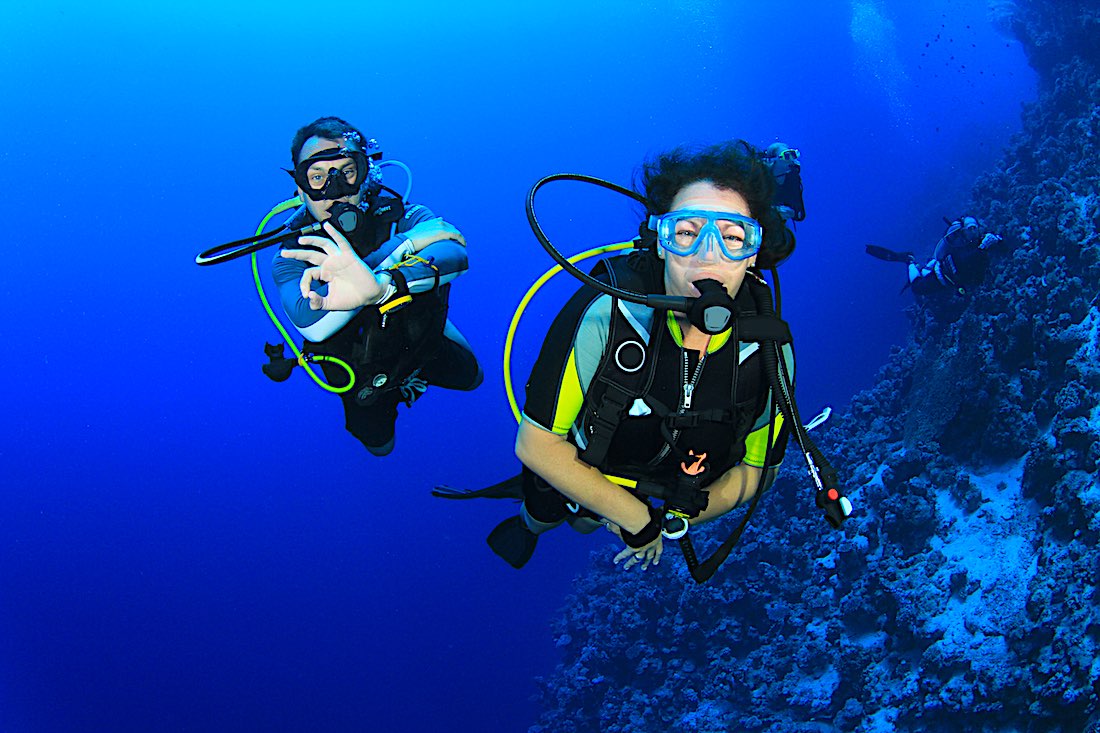
Scuba diving is built around the buddy system, an essential part of diver safety, communication, enjoyment, and overall dive management. Except for specially trained and certified technical or solo divers, recreational scuba diving is designed to be conducted with a dive buddy at all times.
The buddy system allows divers to support one another before, during, and after a dive. Buddies assist with equipment checks, underwater communication, navigation, air monitoring, and emergency response if required. Beyond safety, diving with a buddy also enhances the overall experience by allowing divers to share observations, marine life encounters, and underwater exploration together.
In modern diving operations, the buddy system also plays an important role in supporting good hygiene and social responsibility practices. When possible, divers who are already within the same social circle — such as couples, family members, friends travelling together, or individuals already socially exposed to one another — are paired as dive buddies. This helps minimise unnecessary close contact between unrelated participants during training and diving activities.
At Black Turtle Dive, our instructors always aim to organise buddy teams thoughtfully, prioritising both diver comfort and safety while maintaining responsible operational practices. By combining strong buddy awareness with sensible hygiene measures, divers are able to continue enjoying safe, social, and rewarding underwater experiences.
Diving With a Buddy
Visiting Koh Tao alone does not mean you are unable to participate in scuba diving activities or become part of a buddy team. Scuba diving remains a highly social activity, and divers travelling independently can still safely and comfortably take part in courses, fun dives, and conservation programs while following sensible hygiene and distancing practices.
Modern dive operations have adapted many traditional procedures to allow divers to maintain appropriate social distancing without compromising safety or the effectiveness of the buddy system. For example, pre-dive buddy checks can now be conducted visually and verbally while maintaining a comfortable distance between divers, rather than requiring unnecessary close physical contact.
Underwater, divers still operate as an effective buddy team through communication, awareness, and shared dive planning, while avoiding unnecessary direct contact wherever possible. Dive professionals also take care to organise buddy pairings thoughtfully and manage group interactions responsibly to ensure both safety and comfort for all participants.
These simple adaptations allow solo travellers to continue enjoying the social, educational, and adventurous aspects of scuba diving while helping create a safer and more considerate environment for everyone involved.
Outdoor Scuba Diving Activities
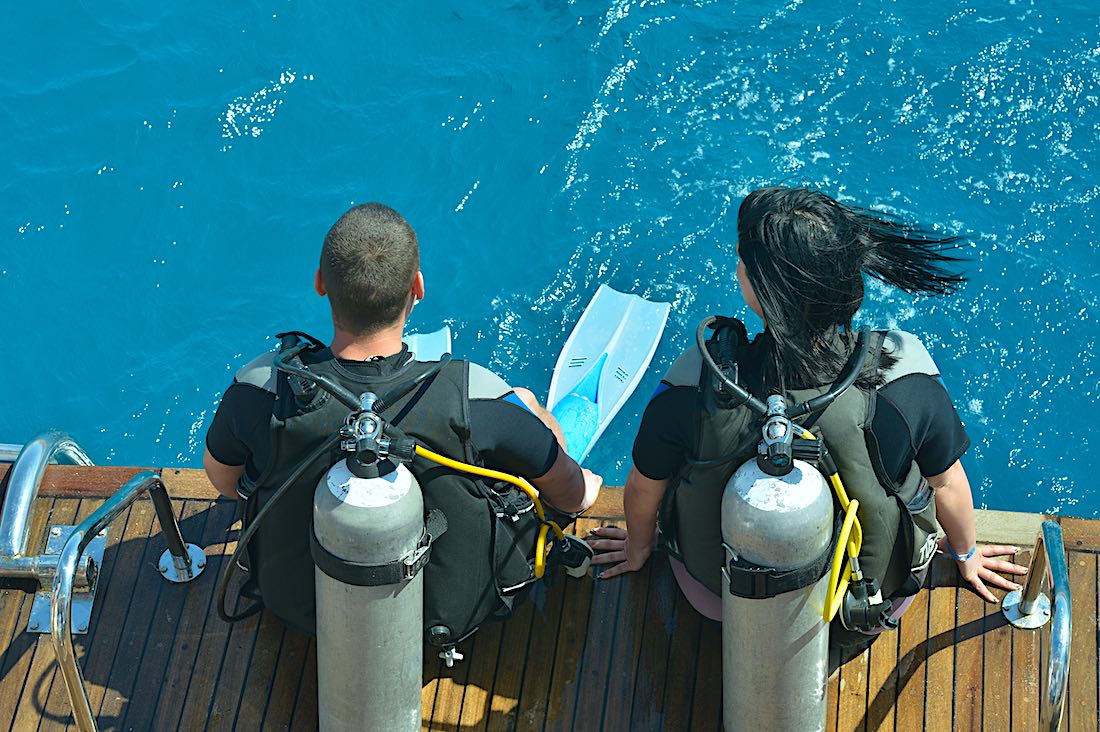
The benefit of scuba diving is that it is a sport primarily done outside, especially on Koh Tao. On the island, there are no indoor swimming pools for confined water training, and even knowledge development sessions can be conducted outdoors due to the warm tropical climate. All dive boats have open-air spaces and are very well-ventilated when heading out for a dive trip around the island. The risk of virus transmission is much lower outside than inside because viruses released into the air can rapidly become diluted in the atmosphere. When organizing diving activities outdoors in combination with appropriate social distancing, the risk of disease transmission can be reduced to a minimum.
Do Not Dive if You Are Unwell
One of the most important responsibilities within scuba diving — both for personal safety and the wellbeing of others — is to avoid diving or travelling when feeling unwell. This has always been an essential principle within the dive industry, but it has become even more important in recent years with increased awareness surrounding communicable illnesses such as COVID-19.
Divers experiencing symptoms of illness, including fever, coughing, respiratory discomfort, fatigue, or other signs of infection, should refrain from participating in diving activities until they have recovered fully and, where necessary, received appropriate medical guidance.
Scuba diving environments naturally involve close interaction between divers, instructors, boats, equipment handling, and shared facilities. Choosing not to dive when unwell helps protect fellow divers, dive professionals, local communities, and the wider travel industry from unnecessary risk of disease transmission.
Similarly, individuals who have tested positive for COVID-19, have recently been exposed to communicable illnesses, or are awaiting medical advice should follow current health recommendations and avoid group activities until there is no longer a risk of transmission.
Beyond protecting others, diving while ill can also negatively impact personal safety underwater. Conditions affecting the respiratory system, energy levels, hydration, or overall physical wellbeing may increase the risks associated with scuba diving and reduce a diver’s ability to respond effectively in the water.
Responsible diving begins long before entering the ocean, and prioritising health and honesty about your condition is an important part of being a safe and considerate diver.
Changes to Scuba Diving Training Standards
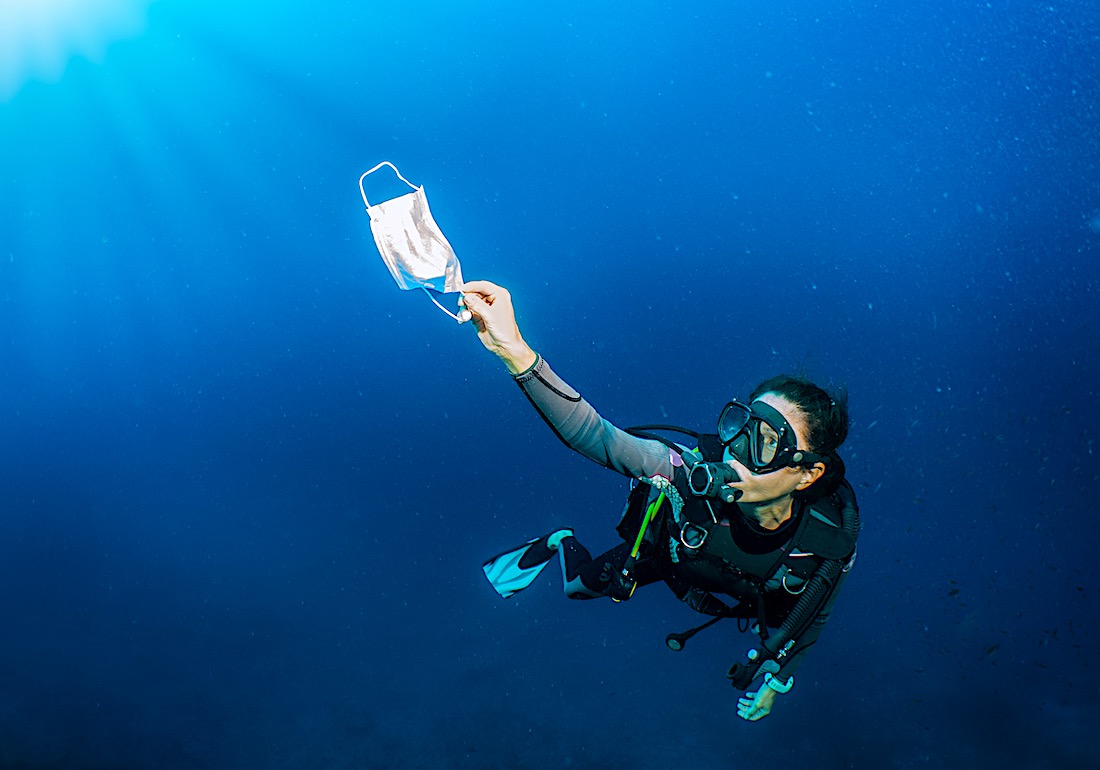
In response to the current situation, PADI as a dive training organization has made some changes to the training standards and communicated those with their members around the world. This means that there are a few skills from certain courses that are now conducted in a different way in order to reduce the risk of virus transmission. Below we have listed some of the changes that have been made to PADI programs.
PADI Dive Course Update Information
PADI Open Water Diver Course
To reduce risk of disease transmission during alternate air source practice in the Open Water Course, the alternate air source is no longer tested by breathing from it before the dive, but just by pushing the purge button. That way you can avoid contamination of the alternate air source until the moment it needs to be used for practice. After skill practice, it needs to be disinfected properly before next use.
PADI Rescue Diver, Emergency Oxygen Provider, and EFR Courses
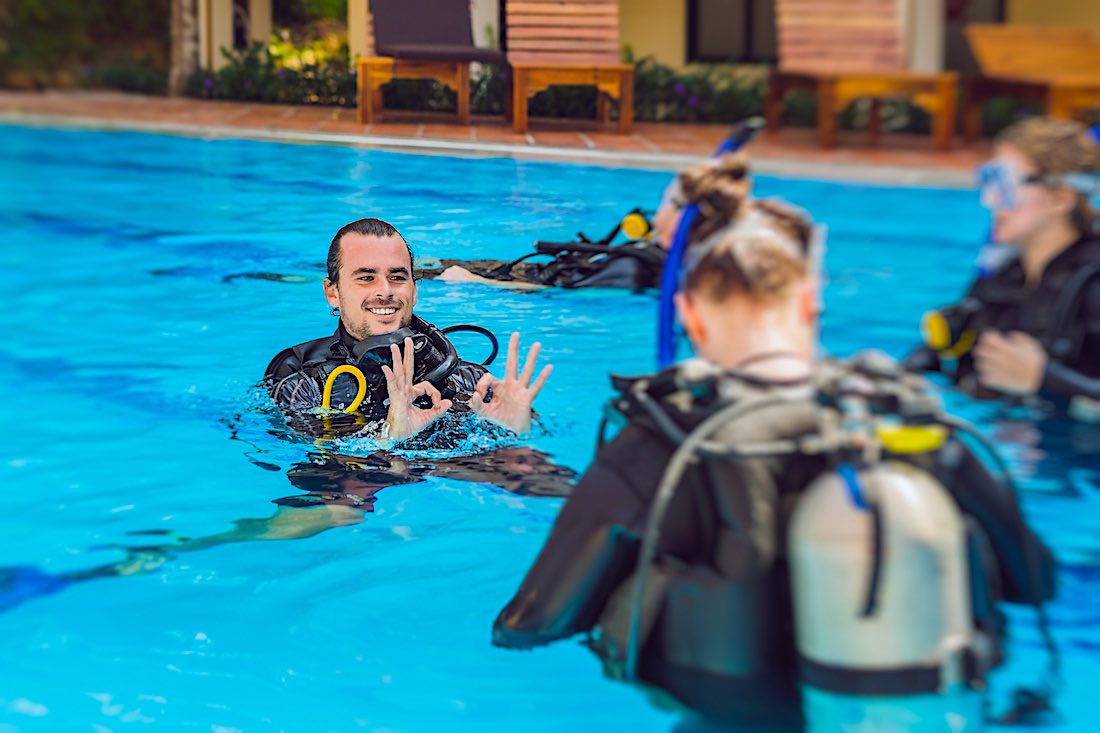
In the PADI Rescue Diver course, when using a rescue breathing mask we ensure each diver has a mask (with valve) that is used on that diver during training. The rescuer cannot make lip contact with the mask, and the valve is there to redirect the victim’s breath away from the rescuer. After training, the mask and valve needs to be cleaned according to the manufacturer guidelines. For the mouth-to-mouth rescue breathing method, rescuers use a rescue breathing mask on the victim but use mouth-to-mouth techniques such as (simulating) pinching the nose etc. Another method is to use face shields that are commonly used with CPR mannequins during the exercise to avoid skin-to-skin contact.
Use of Rescue and Emergency Equipment
Lastly, the rescuer can simulate the required removal of the diver’s mask step of the skill, but keep the victim's diver mask in place so that the victim's nose does not need to be touched directly. When using oxygen kits for Rescue Diver training or in the Emergency Oxygen Provider course, make sure to disinfect oxygen masks with disinfection wipes between users. After class, the mask and tubing needs to be cleaned according to the manufacturer's recommendations. The same goes for Emergency First Response training and the use of CPR mannequins. All contact surfaces need to be thoroughly disinfected in between different users. Also, we make sure students have access to hand washing facilities and we provide liquid hand sanitizer.
PADI Divemaster Course on Koh Tao
In Exercise 5 – Equipment Exchange – in the PADI Divemaster course, candidates will no longer share one single regulator second stage when performing the exercise. During the exchange, candidates will continue breathing from their own primary second stage. Once the scuba unit has been exchanged, candidates will begin breathing from the buddy’s alternate air source for the remainder of the exercise, they will not use the buddy’s primary second stage. Also, instead of exchanging masks, the candidate removes the mask, hands it to the buddy, gets it back and replaces their own mask. The whole equipment exchange exercise has to be completed while neutrally buoyant to get a passing score.

PADI Online Learning Courses on Koh Tao
There are 3 PADI Specialty courses that can be taught entirely online. It is the Enriched Air Specialty, Equipment Specialist and Project AWARE specialty. The reason is that these courses do not require any dives in order to be certified, they can all be taught ‘dry’. If you are aware that the Enriched Air Specialty (Nitrox course) is the most popular PADI Specialty in the world, this offers a great opportunity for divers to continue their education from home. Even for Pro Level courses there are some options available. The PADI Divemaster course offers a great opportunity for instructor-led sessions, particularly in areas like dive theory. For the Instructor Development Course (IDC) your Course Director can teach certain presentations from the IDC curriculum online via video chat.
Having Fun and Staying Safe
The year 2020 was extremely challenging for all of us in many different ways. Hopefully, the current situation will not discourage you from taking a diving course or signing up for some fun dives. By following some simple steps, the risk of COVID-19 transmission when scuba diving can be reduced to a minimum, and everyone can still enjoy their favorite sport in a safe way. Many dive centers around the world have been heavily hit by the pandemic, and now is the time to support your local dive shop more than ever.
10 Handzeichen, die jeder Taucher kennen sollte

Starte deinen PADI Tauchkurs mit E-Learning
KURSE BUCHEN – PREISE