HTMS Hanhak Sattru 312 Wreck Dive Site Koh Tao
Koh Tao’s newest east-coast wreck dive
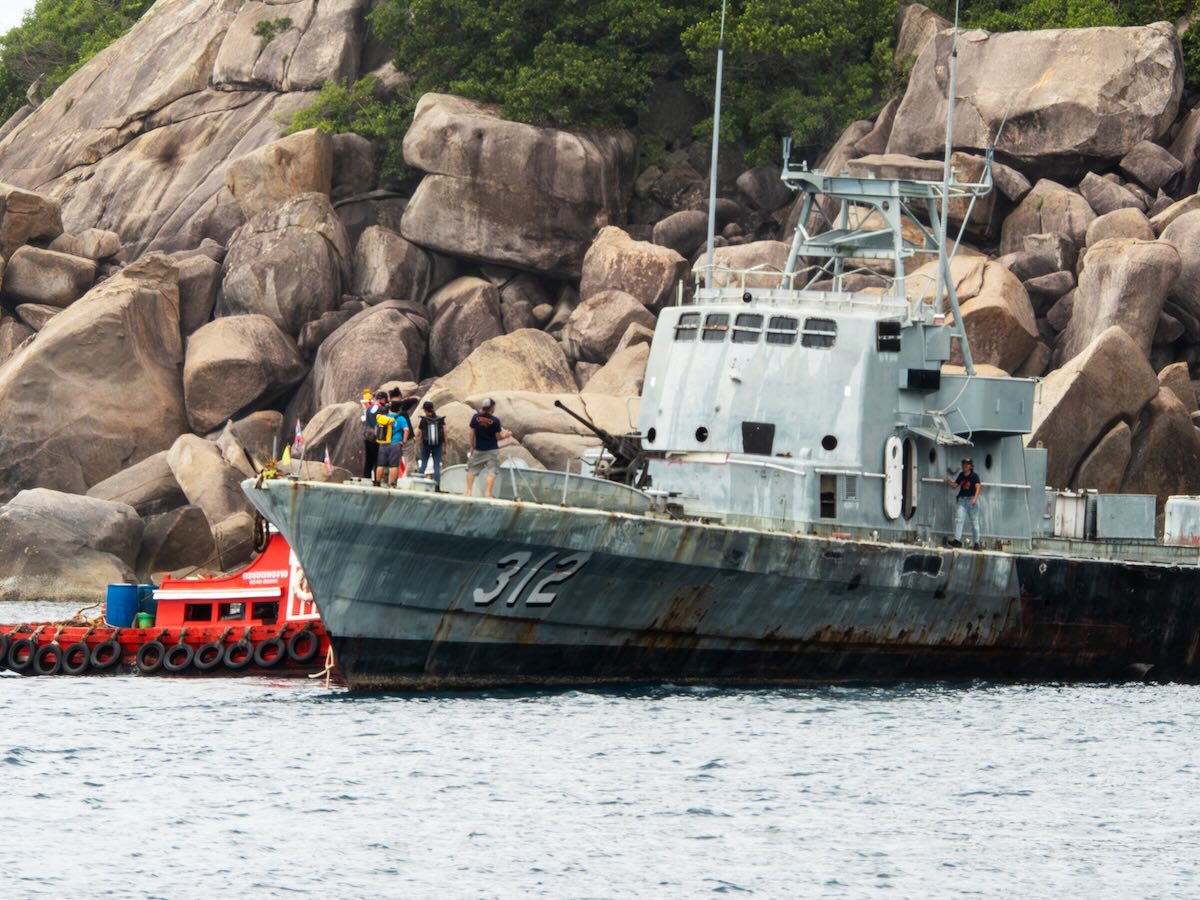
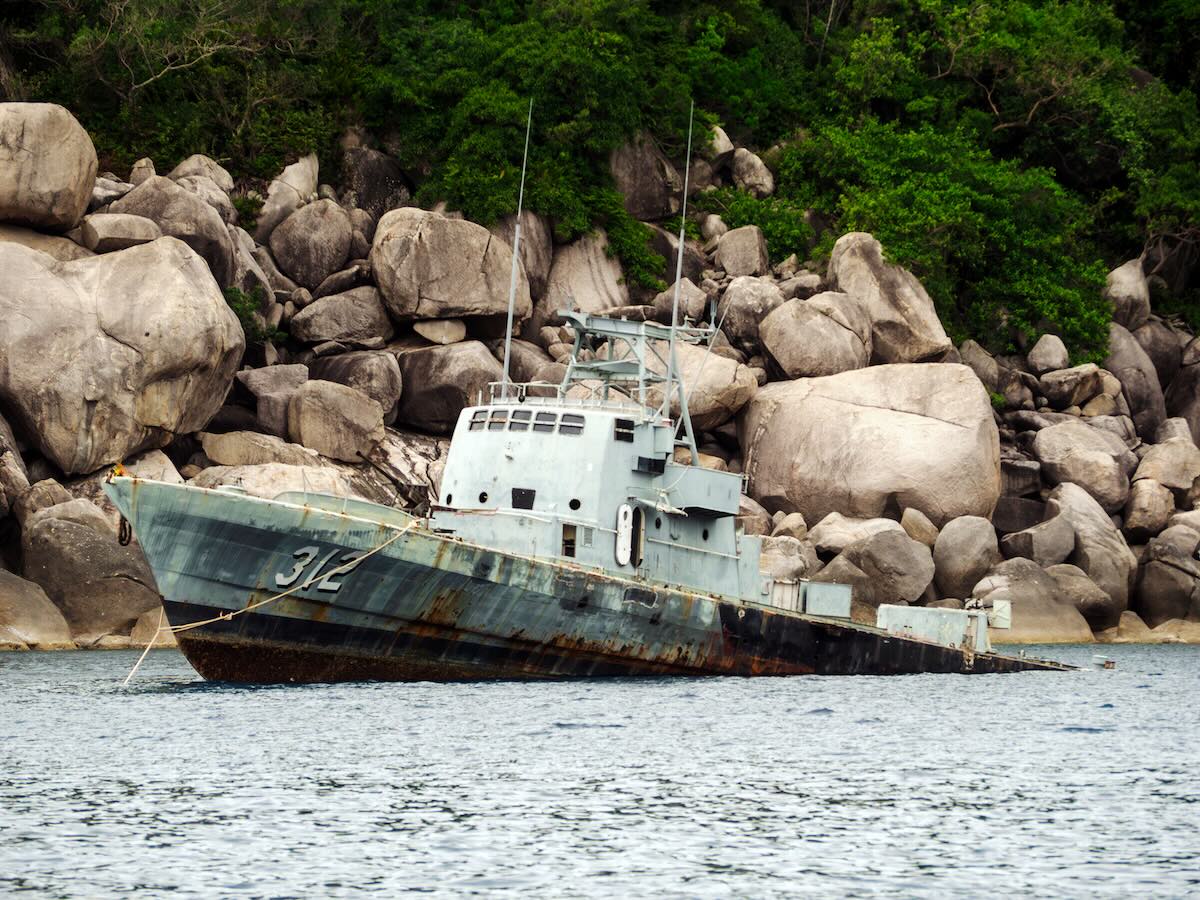
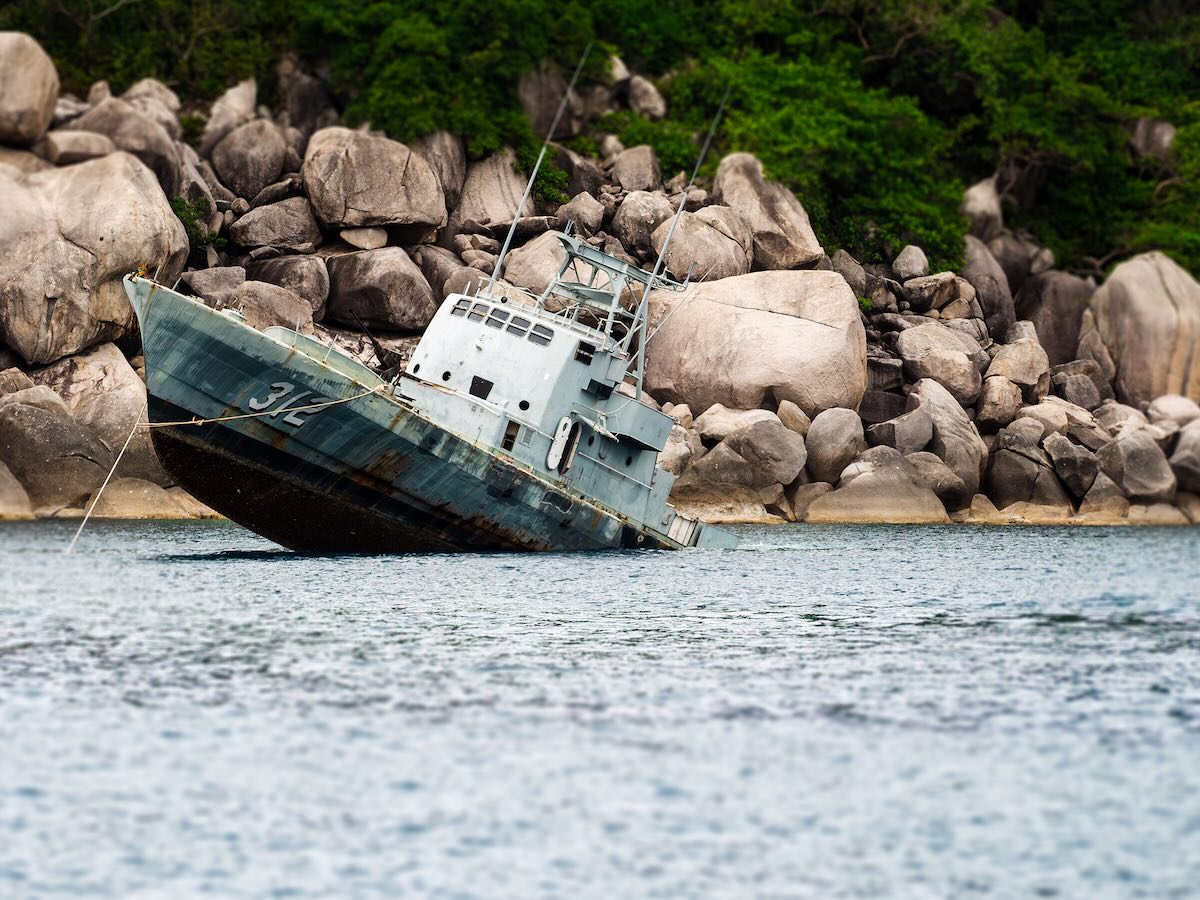
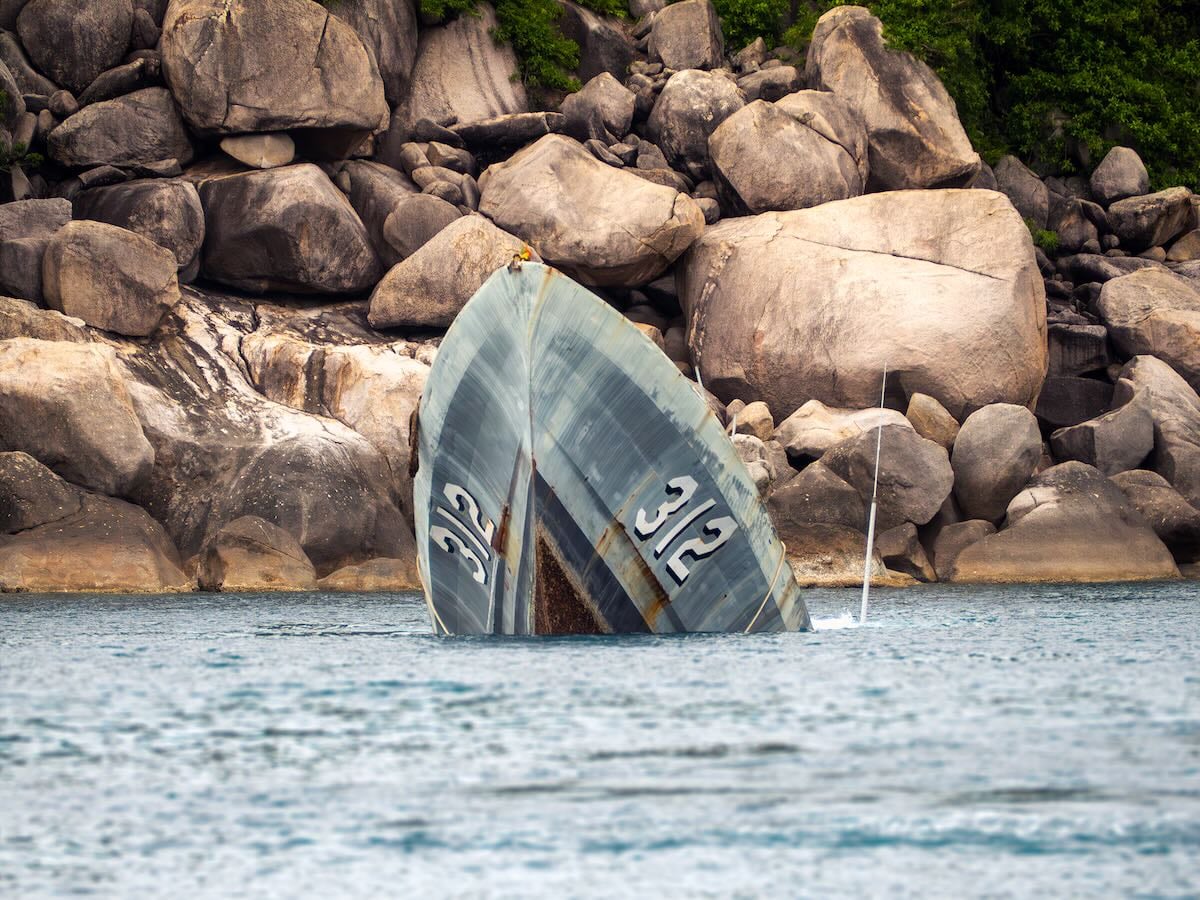
The HTMS Hanhak Sattru 312 is one of two former Royal Thai Navy fast attack craft purposely sunk off Koh Tao in September 2023, transforming the island’s east coast into a world-class wreck diving destination.
Resting in the calm waters of Aow Mao Bay, just north of Laem Thian, the 44.9-metre vessel sits upright on a sandy seabed at depths of 22 to 24 metres, with the highest point of the wreck reaching up to 13 metres below the surface.
For Black Turtle Dive divers, the Hanhak Sattru opens a new chapter in Koh Tao’s wreck diving heritage. Alongside its sister ship, HTMS Suphairin 313, and the established HTMS Sattakut, MV Trident and MV Unicorn, Koh Tao now offers the most diverse wreck diving portfolio in the Gulf of Thailand.

Brief history of HTMS Hanhak Sattru 312
The HTMS Hanhak Sattru began service in 1976, built by Singapore Shipbuilding and Engineering Company Limited as a high-speed attack craft for the Royal Thai Navy’s Gulf Patrol Fleet.
Across more than four decades of active duty, the vessel was equipped with sophisticated weaponry of its era, including Gabriel surface-to-surface missile launchers, a 20mm anti-aircraft cannon at the bow and a 50-calibre machine gun at the stern.
Together with HTMS Suphairin 313, the two sister ships formed part of Thailand’s coastal defence posture, conducting joint operations with the Royal Thai Naval Special Warfare Division.
After 42 years of operational service, the Hanhak Sattru was decommissioned in 2018. Rather than being scrapped, the vessel was transferred to the Department of Marine and Coastal Resources (DMCR) to begin a new mission as part of the Underwater Learning Park and Marine Ecosystem Rehabilitation Project, an initiative focused on Surat Thani Province’s coastal waters.
Preparation for sinking
The transformation from warship to artificial reef is a meticulous process. Every fluid was drained, every loose fitting removed, and any material that might harm the marine environment stripped from the vessel. Hatchways and access points were carefully cut and reinforced to allow safe diver penetration while preventing entanglement risks.
In September 2023, after months of environmental preparation, the Hanhak Sattru was towed to its final resting position at the mouth of Aow Mao Bay and scuttled in a controlled sinking. The ship descended upright onto the sandy seabed, exactly as planned.
Diving the HTMS Hanhak Sattru 312
Site location and conditions
The Hanhak Sattru lies approximately 60 metres north of Laem Thian on Koh Tao’s east coast, at the mouth of Aow Mao Bay. Its sheltered position is one of the wreck’s defining features.
While Koh Tao’s most famous wrecks sit on the west coast and become a little rougher during the south-west monsoon, the Hanhak Sattru offers consistently calm conditions during the same period, making it a wreck dive suited to May to September.
| Specification | Detail |
| Location | Aow Mao Bay, east coast of Koh Tao |
| Maximum depth | 24 metres |
| Top of the wreck | 13 metres |
| Length | 44.9 metres |
| Beam | 7 metres |
| Sunk | September 2023 |
| Best season | May to September |
| Recommended level | Advanced Open Water Diver |
What to expect underwater
Approaching the wreck from the descent line, divers first encounter the silhouette of the bow rising from the sand. The intact superstructure, including the bridge, mast and gun positions, gives the wreck a clear sense of purpose. The 20mm bow cannon and aft 50-calibre machine gun mount remain visible.
Visibility on the east coast of Koh Tao typically ranges from 10 to 20 metres at this site. Currents are usually light, though stronger tidal flows can pass through Aow Mao Bay during peak tidal exchange.
Skill level and certification requirements
The Hanhak Sattru is suited to PADI Advanced Open Water Divers and above. Divers must hold a Deep Diver certification or have completed the deep adventure dive of the Advanced Open Water course before exploring the lower sections of the wreck.
Penetration of the wreck is reserved for divers with PADI Wreck Diver Specialty certification. While the ship has been prepared for safe penetration, internal navigation, line laying and emergency procedures all require formal training. Black Turtle Dive offers the PADI Wreck Diver Specialty as a two- to four-day programme, often using the HTMS Sattakut and the new wrecks together as training sites.
Marine life around the Hanhak Sattru
Even within months of sinking, the Hanhak Sattru began attracting marine life. Steel surfaces are colonised first by encrusting organisms — barnacles, hydroids and bryozoans — followed by algae, soft corals and eventually hard coral recruits. This succession will continue for decades, ultimately forming a fully developed artificial reef ecosystem.
Resident and visiting species
Within the first year of deployment, divers have already reported sightings of:
- Schooling pelagic species — yellowtail barracuda, chevron barracuda and great barracuda use the wreck as a hunting and resting station
- Reef predators — malabar grouper, brown marbled grouper and giant trevally patrol the structure
- Rays — the Jenkins whip ray, a known resident of nearby HTMS Sattakut, is increasingly observed at the new wrecks
- Reef fish — schools of fusiliers, snappers, sweetlips and the full Gulf of Thailand reef community are establishing residence
- Macro life — early-stage colonisation by nudibranchs, shrimps and small crustaceans is well underway in the wreck’s nooks and shaded sections
As the wreck matures, sightings of larger pelagic species and cephalopods are expected to increase, mirroring the ecological progression observed on the older HTMS Sattakut over its decade-plus on the seabed.
A new habitat — the conservation story
From decommissioned warship to thriving reef
Artificial reefs created from purpose-sunk vessels deliver measurable conservation benefits when carried out responsibly. The Hanhak Sattru is a textbook example of this principle in action. The wreck provides:
- Hard substrate for coral recruitment in an area where natural rocky surfaces are limited
- Three-dimensional structural complexity that supports ten to twenty times the fish biomass of an equivalent area of bare seabed
- Refuge habitat for juvenile fish from open-water predators, supporting nearby natural reefs through population connectivity
- Pressure relief for popular natural reefs by attracting divers to alternative sites
The Hanhak Sattru and Suphairin together represent one of the most significant conservation investments in Koh Tao’s recent diving history.
Climate resilience and ecosystem function
Steel-hulled artificial reefs are notably more resilient to climate stressors than natural coral reefs. They do not bleach, they cannot be killed by elevated sea temperatures, and they continue providing structure and habitat even when adjacent natural reefs experience disturbance. As ocean conditions become more variable, these stable structures play an increasingly important role in maintaining ecosystem function across the wider seascape.
Citizen science and monitoring opportunities
Black Turtle Dive supports the long-term monitoring of Koh Tao’s artificial reefs through the Conservation Diver Certification programme, our position as a PADI AWARE Foundation 100 AWARE Partner, and our ongoing collaboration with marine research initiatives in the Gulf of Thailand.
Divers participating in our conservation courses contribute to fish population surveys, coral recruitment monitoring and debris removal at sites including the new wrecks.
Wreck diving courses at Black Turtle Dive
PADI Wreck Diver Specialty Course
The four-dive PADI Wreck Diver Specialty teaches the skills needed for safe wreck exploration: hazard assessment, penetration planning, mapping techniques, safe navigation inside enclosed spaces, line laying and emergency procedures. The new wrecks are now part of our standard rotation alongside the HTMS Sattakut.
Other relevant courses
The PADI Advanced Open Water Diver course is the minimum entry point for diving the Hanhak Sattru, with deep and navigation adventure dives forming part of the certification. The PADI Deep Diver Specialty extends maximum recreational depth to 40 metres, opening up exploration of the deeper sections of both new wrecks.
For technical divers, PADI Tec Sidemount and PADI Tec 40 courses offer the configuration and skills necessary for extended-bottom-time wreck dives.
Plan your dive
The HTMS Hanhak Sattru 312 is part of Black Turtle Dive’s standard fun diving rotation as well as our wreck specialty training. Whether you’re working towards your first wreck certification or simply want to explore one of the Gulf of Thailand’s newest artificial reefs, our experienced team will guide you safely through this remarkable site.
Frequently Asked Questions
When was the HTMS Hanhak Sattru sunk?
The HTMS Hanhak Sattru 312 was sunk in September 2023 as part of the Underwater Learning Park and Marine Ecosystem Rehabilitation Project. It was scuttled in a controlled deployment after 42 years of active service with the Royal Thai Navy and a five-year decommissioning and preparation period.
How deep is the Hanhak Sattru wreck?
The wreck sits on a sandy seabed at approximately 22 to 24 metres, with the top of the structure reaching up to 13 metres below the surface. Most of the dive is conducted between 13 and 24 metres, well within recreational limits for Advanced Open Water Divers.
What certification do I need to dive the Hanhak Sattru?
A minimum of PADI Advanced Open Water Diver is required, due to the depth profile. To penetrate the interior of the wreck, divers must hold the PADI Wreck Diver Specialty certification or its equivalent. Black Turtle Dive offers both courses.
Where exactly is the wreck located?
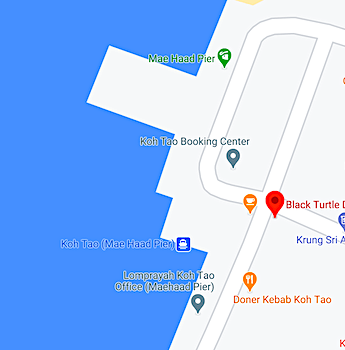
The HTMS Hanhak Sattru lies approximately 60 metres north of Laem Thian, at the mouth of Aow Mao Bay on the east coast of Koh Tao. The boat journey from our centre takes approximately 25 to 30 minutes.
Can I do the Hanhak Sattru as a fun dive without a wreck specialty?
Yes. Advanced Open Water Divers can enjoy the wreck externally, exploring the bridge, deck features, gun mounts and superstructure without entering enclosed spaces. The exterior of the wreck is fully accessible and offers a rewarding dive on its own.
Is the Hanhak Sattru divable year-round?
Yes. Its sheltered location at the mouth of Aow Mao Bay on the east coast makes it divable in nearly all weather conditions, including during the south-west monsoon when west-coast wreck sites can be affected by surface conditions.
How does this wreck compare to the HTMS Sattakut?
The Sattakut is a little longer (49 m vs 44.9 m for the Hanhak Sattru), older (sunk 2011) and sits deeper at 18 to 30 metres on the west coast. The Hanhak Sattru is shallower, newer, and on the opposite coast — making the two wrecks complementary rather than competing dive sites. Many divers explore both during a multi-day stay.
What marine life can I expect to see?
Already, divers have reported barracuda, grouper, trevally and an emerging community of reef fish, shrimp and nudibranchs. As the wreck matures over the coming years, the diversity and density of marine life will continue to grow.
Is wreck penetration permitted?
Yes — but only for divers holding the PADI Wreck Diver Specialty certification. The wreck has been carefully prepared for safe penetration with cleared access points, but interior diving requires specific training in line laying, navigation and emergency procedures.
How do I book a dive at the HTMS Hanhak Sattru?
Contact Black Turtle Dive directly to discuss your certification level and goals. We can arrange fun dives for certified divers or recommend the appropriate course pathway if you’re working toward wreck diving certification.
BOOK COURSES – PRICES