HTMS Suphairin 313 Wreck Dive Site Koh Tao
Koh Tao’s newest west-coast wreck dive
The HTMS Suphairin 313 is one of two former Royal Thai Navy fast attack craft purposely sunk off Koh Tao in September 2023, giving the island its first new west-coast wreck since the HTMS Sattakut in 2011.
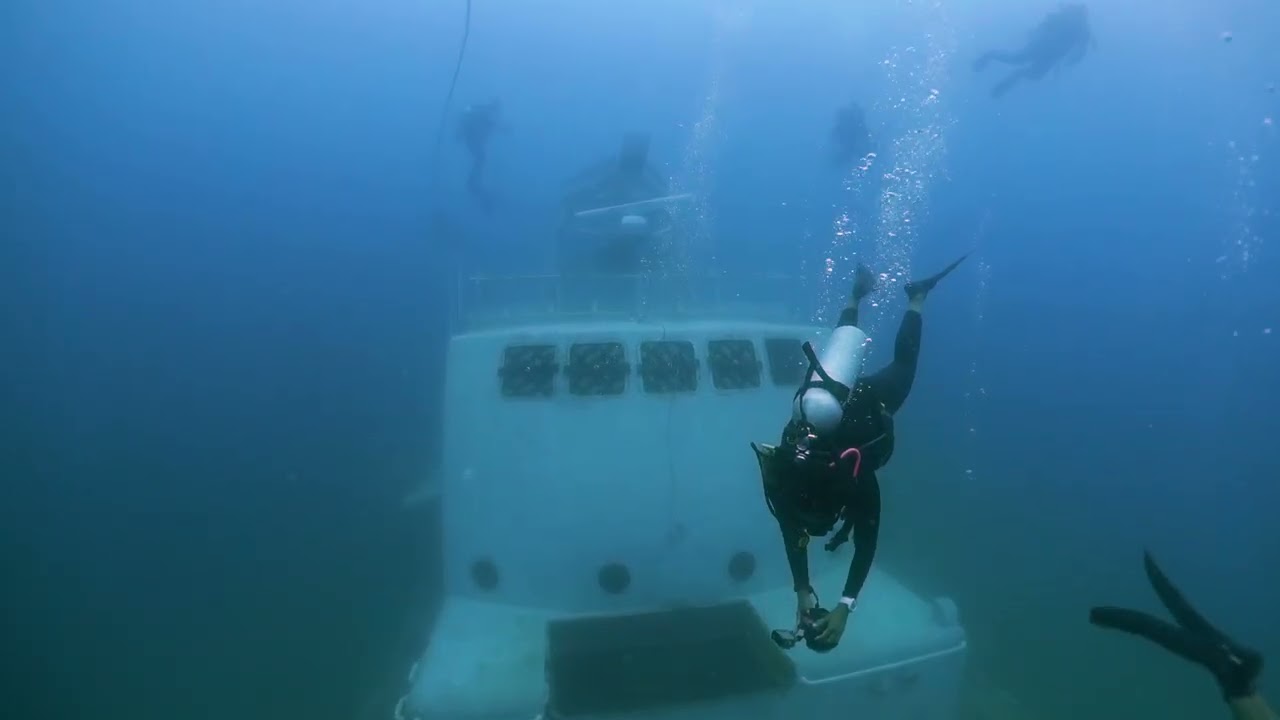
Resting upright on the seabed approximately 15 metres north of No Name Pinnacle, the 44.9-metre vessel sits in 24 to 28 metres of water, with the highest point of the wreck reaching 16 metres below the surface.
For Black Turtle Dive divers, the Suphairin transforms the Koh Nang Yuan area from a beginner-friendly training zone into one of Koh Tao’s most diverse dive sectors — combining shallow reef sites, the iconic No Name Pinnacle, the Buoyancy World artificial training reef, and now a full-size warship wreck within minutes of one another.
Brief history of HTMS Suphairin 313
The HTMS Suphairin entered service in 1976 alongside her sister ship HTMS Hanhak Sattru 312, both built by Singapore Shipbuilding and Engineering Company Limited as high-speed attack craft for the Royal Thai Navy’s Gulf Patrol Fleet.
The Suphairin’s 42-year operational career spanned coastal defence duties, joint operations with the Royal Thai Naval Special Warfare Division, and routine patrolling of Thailand’s territorial waters.
As a fast attack craft of her era, the Suphairin was originally fitted with Gabriel surface-to-surface missile launchers, a 20mm anti-aircraft cannon at the bow and a 50-calibre machine gun at the stern. Several of these features remain visible on the wreck today, providing a tangible connection to the ship’s military heritage.
In 2018, after more than four decades of service, the Suphairin was decommissioned and transferred to the Department of Marine and Coastal Resources (DMCR). Her next mission would be at the heart of the Underwater Learning Park and Marine Ecosystem Rehabilitation Project — a Surat Thani Province initiative to enhance marine biodiversity and create educational diving opportunities through purpose-sunk artificial reefs.
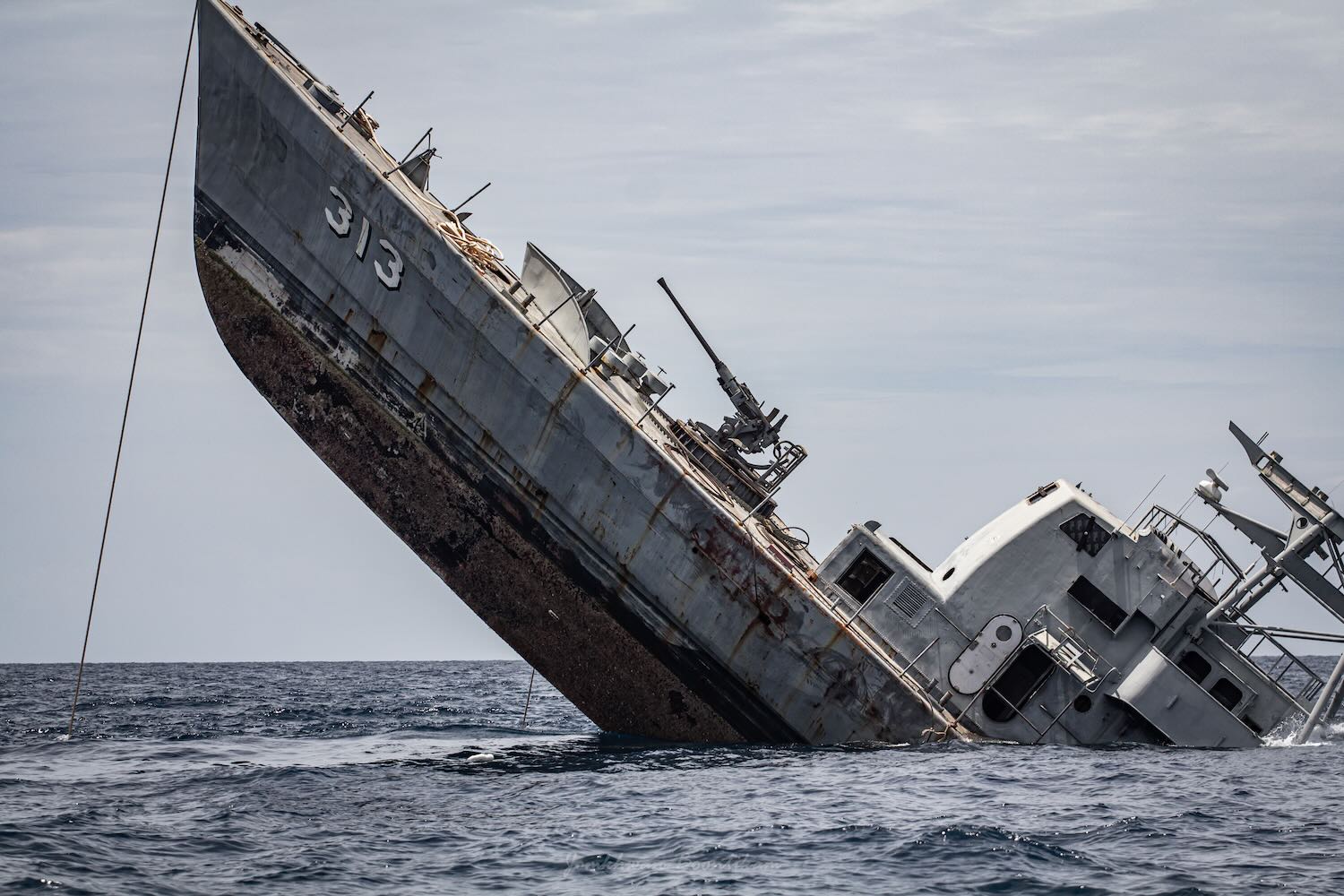
Preparation and deployment
Five years of preparation followed decommissioning. Fuel and lubricants were drained, hazardous materials removed, doorways and hatchways carefully cleared and reinforced for safe diver penetration.
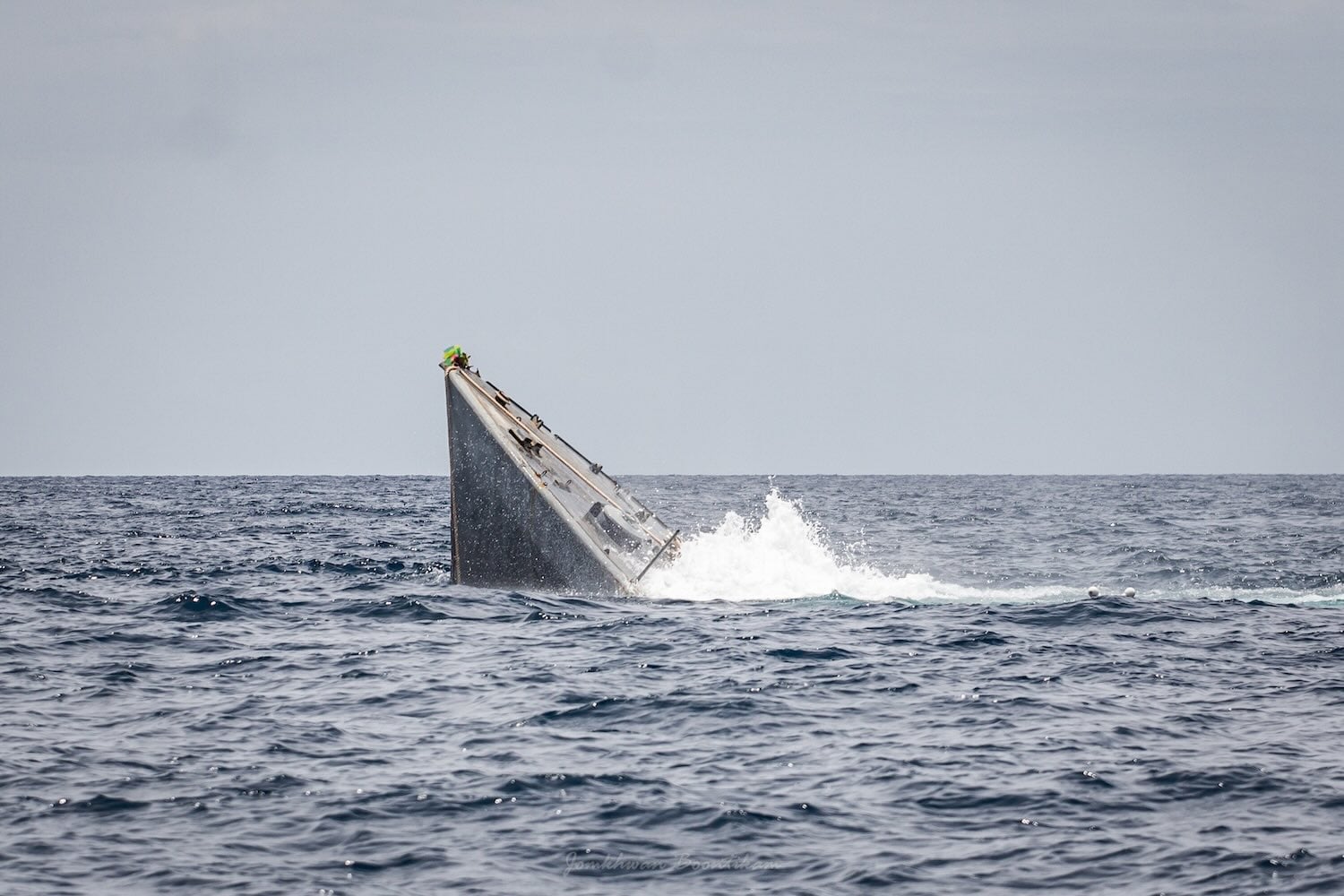
The vessel was towed to its final location off the western edge of Koh Nang Yuan in September 2023 and scuttled in a controlled sinking, settling upright on the seabed in near-perfect orientation.
Diving the HTMS Suphairin 313
Site location and conditions
The Suphairin lies approximately 15 metres north of No Name Pinnacle, off the west coast of Koh Nang Yuan. Its position next to one of Koh Tao’s most popular dive sites makes for an exceptional combined-site experience: divers can begin the dive on the wreck and finish drifting onto No Name Pinnacle, or vice versa, depending on conditions and dive plan.
| Specification | Detail |
| Location | 15 m north of No Name Pinnacle, west of Koh Nang Yuan |
| Maximum depth | 28 metres |
| Top of the wreck | 16 metres |
| Length | 44.9 metres |
| Beam | 7 metres |
| Sunk | September 2023 |
| Best season | March to September (calm west-coast conditions) |
| Recommended level | Advanced Open Water Diver |
What to expect underwater
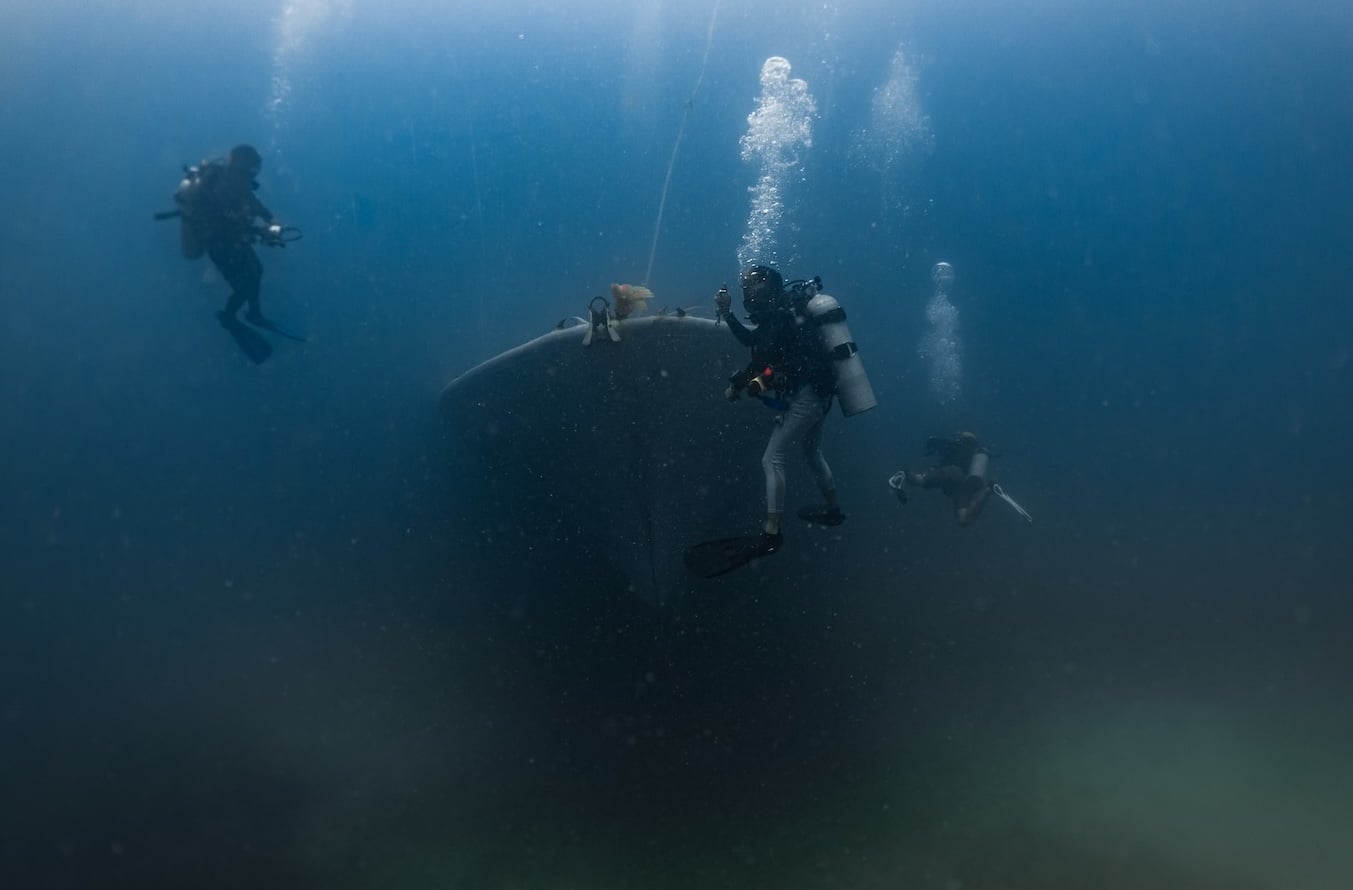
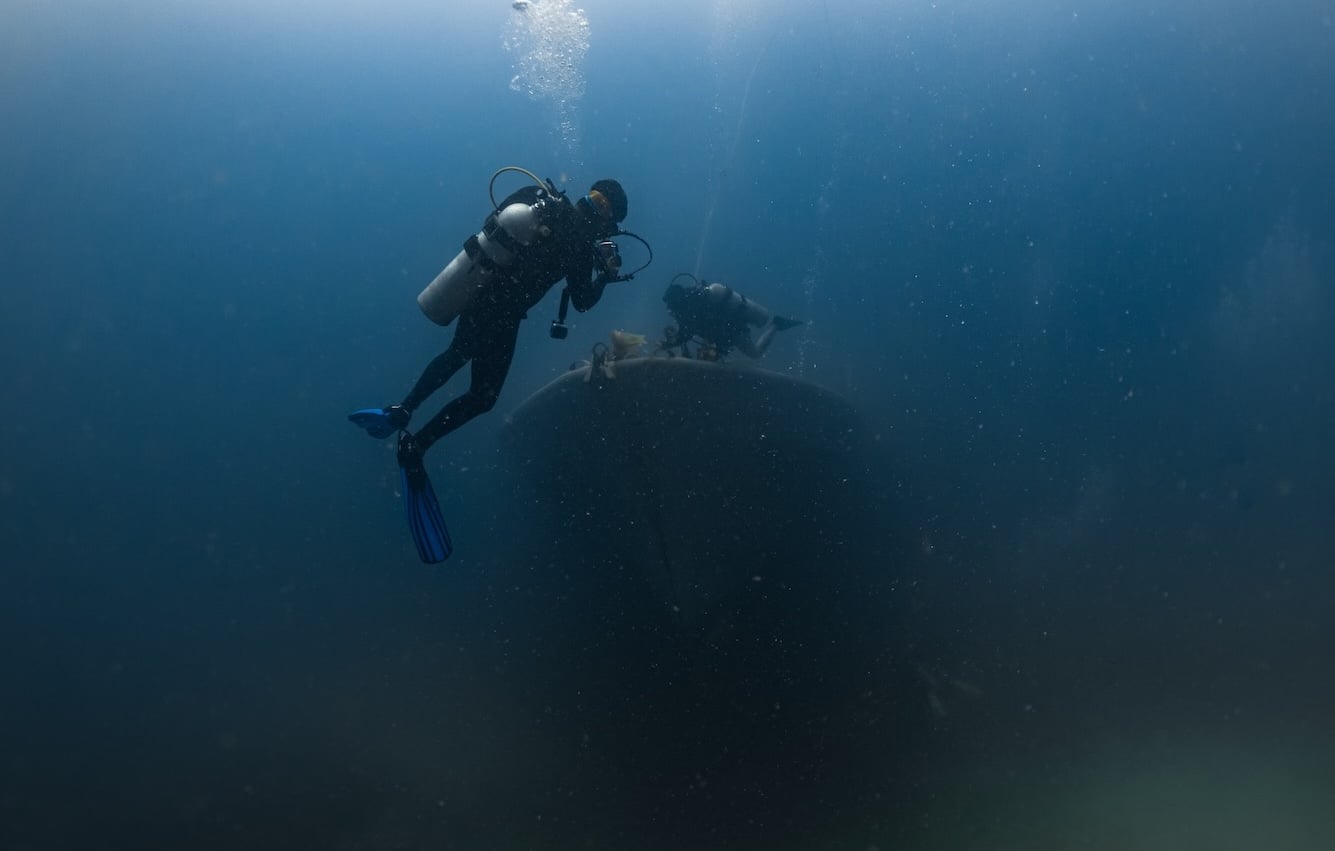
Descending the line, divers first see the intact superstructure rising from a sandy seabed. The ship’s mast, bridge, deck features and weapons mounts remain clearly recognizable. The 20mm bow cannon is one of the most photographed features, while the aft 50-calibre machine gun mount provides another iconic image opportunity.
Visibility on this part of Koh Tao’s west coast typically ranges from 15 to 25 metres, often exceeding the typical conditions of inland reef sites due to the open-water proximity. Currents around the Koh Nang Yuan area are usually mild but can strengthen during peak tidal exchanges, and divers should pay attention to dive briefings on the day.
Skill level and certification requirements
The HTMS Suphairin is suited to PADI Advanced Open Water Divers and above. The maximum depth of 28 metres places this dive firmly within the Advanced level, with the deep adventure dive of the Advanced Open Water course providing the necessary minimum certification.
Penetration is reserved for divers holding the PADI Wreck Diver Specialty certification. The interior has been carefully prepared with safe access points, but internal diving requires formal training in line laying, navigation in enclosed spaces and emergency response.
Black Turtle Dive offers PADI Wreck Diver Specialty as a two- to four-day programme, with the new wrecks now joining the HTMS Sattakut as core training sites.
A combined-site advantage
One of the standout features of the Suphairin’s location is the proximity to No Name Pinnacle. Many divers choose to combine both sites in a single dive, exploring the wreck’s external structure first and then ascending onto the rich coral reef of the pinnacle for the second half of the dive.
The granite outcrop attracts schools of reef fish, batfish and macro life, providing a natural counterpoint to the steel structure of the wreck.
Marine life around the Suphairin
The Suphairin has been on the seabed since September 2023, and ecological succession is well underway. Steel surfaces are being colonised by encrusting organisms — barnacles, hydroids, bryozoans and early algae — with soft coral recruitment now visible on shaded vertical surfaces. Hard coral establishment will follow over subsequent years.
Resident and visiting species
Divers exploring the Suphairin can already expect sightings of:
- Pelagic species — yellowtail barracuda, chevron barracuda and great barracuda hunt around the wreck, particularly at dawn and dusk
- Trevally and snapper — schools of giant trevally, smooth-tail trevally and snappers patrol the upper structure
- Reef predators — malabar grouper, brown marbled grouper and emperor fish use the wreck as ambush points
- Rays — Jenkins whip rays and blue-spotted ribbontail rays have begun colonising the sandy seabed around the hull
- Reef fish — fusiliers, sweetlips, butterflyfish, angelfish and triggerfish are all establishing residence as the wreck matures
- Macro life — cleaner shrimps, durban dancing shrimps, nudibranchs and small invertebrates are increasingly common in the wreck’s shaded sections
The location near No Name Pinnacle means the Suphairin also benefits from the established reef community of its neighbour, with juvenile fish migrating between the two sites as part of a single connected ecosystem.
A new habitat — the conservation story
From warship to artificial reef
The deliberate sinking of decommissioned vessels for marine conservation is a globally established practice. When carried out responsibly, with thorough environmental preparation and careful site selection, purpose-sunk wrecks deliver lasting benefits to marine ecosystems. The Suphairin demonstrates these benefits clearly:
- Habitat creation in an area where natural rocky substrate is limited
- Three-dimensional structural complexity supporting populations of reef and pelagic fish at densities far above bare seabed
- Pressure relief for natural reef sites by attracting recreational divers to alternative locations
- Educational value as a living classroom for divers learning about reef succession, marine biodiversity and ocean stewardship
Climate resilience
Steel-hulled artificial reefs offer one significant advantage over natural coral reefs: they do not bleach. As ocean temperatures rise and natural coral systems face increasing stress, artificial reefs provide stable, persistent habitat that maintains ecosystem function regardless of bleaching events. This makes wrecks like the Suphairin an important component of Koh Tao’s broader marine resilience portfolio.
A platform for research and citizen science
Black Turtle Dive’s role as a Conservation Diver Certification Center and PADI AWARE Foundation 100 AWARE Partner means the new wrecks immediately become part of our long-term marine monitoring activities.
Divers participating in our conservation programs contribute fish population data, coral recruitment surveys and debris removal records — building a baseline dataset for these new artificial reefs that will inform reef management decisions for decades to come.
Wreck diving courses at Black Turtle Dive
PADI Wreck Diver Specialty Course
The four-dive PADI Wreck Diver Specialty is the standard certification for wreck penetration and structured wreck exploration. The course teaches penetration planning, line laying, mapping, navigation in enclosed spaces and emergency response.
Black Turtle Dive uses the HTMS Sattakut, HTMS Suphairin and HTMS Hanhak Sattru as primary training sites, giving students experience across multiple wreck profiles.
PADI Advanced Open Water Diver
For divers not yet at Advanced level, the PADI Advanced Open Water Diver course is the entry point for the Suphairin. The course’s deep adventure dive (to 30 metres) and navigation adventure dive establish the foundation skills needed for safe wreck diving.
Technical diving options
For experienced divers seeking extended bottom time on the wreck, Black Turtle Dive offers PADI Tec Sidemount, PADI Tec 40 and other technical pathways. These courses unlock advanced gas planning, decompression procedures and equipment configurations that support deeper, longer wreck dives — including extended exploration of both the Suphairin and the deeper sections of HTMS Sattakut.
Plan your dive
The HTMS Suphairin 313 is now part of Black Turtle Dive’s standard rotation for fun diving and Wreck Specialty training. Combined with the proximity to No Name Pinnacle and Koh Nang Yuan’s other dive sites, the Suphairin offers one of the most diverse single-dive experiences on Koh Tao.
Frequently Asked Questions
When was the HTMS Suphairin sunk?
The HTMS Suphairin 313 was sunk in September 2023 as part of the Underwater Learning Park and Marine Ecosystem Rehabilitation Project. It was scuttled after 42 years of active Royal Thai Navy service and five years of careful decommissioning and environmental preparation.
How deep is the HTMS Suphairin wreck?
The wreck sits on the seabed at depths between 24 and 28 metres, with the top of the structure (the mast and superstructure) reaching up to 16 metres below the surface. There are ongoing discussions about adding further structure that could raise the highest point to 11 metres in the future.
Where exactly is the Suphairin located?
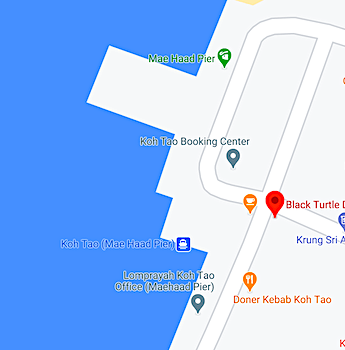
The HTMS Suphairin lies approximately 15 metres north of No Name Pinnacle, off the west coast of Koh Nang Yuan island. The boat journey from Black Turtle Dive takes approximately 15 to 20 minutes.
What certification do I need to dive the Suphairin?
PADI Advanced Open Water Diver is the minimum required certification due to the wreck’s depth. To enter the wreck, divers need the PADI Wreck Diver Specialty certification or equivalent. Both courses are available at Black Turtle Dive.
Can I dive the Suphairin and No Name Pinnacle in one dive?
Yes — and many divers do exactly this. The Suphairin is just 15 metres from No Name Pinnacle, allowing a single-dive exploration of both structures. Typically, divers visit the wreck first then ascend onto the pinnacle’s reef for the shallower second half of the dive.
When is the best time to dive the Suphairin?
West-coast dive sites, including the Suphairin, are at their best between March and September when surface conditions are calm and visibility is at its highest. The wreck remains divable year-round in suitable weather, though winter swells can occasionally affect the west coast.
How does the Suphairin compare to the Hanhak Sattru?
The two wrecks are sister ships of the same class, virtually identical in dimensions (both 44.9 metres long). The Suphairin sits deeper (24-28 m vs 22-24 m) on the west coast, while the Hanhak Sattru is in sheltered waters at the mouth of Aow Mao Bay on the east coast. Combined, they offer complementary wreck experiences across both coasts of Koh Tao.
Is wreck penetration permitted on the Suphairin?
Yes, for divers holding the PADI Wreck Diver Specialty certification. The wreck has been prepared for safe penetration with cleared access points and reinforced doorways, but interior diving requires formal training in line laying, navigation and emergency procedures.
What marine life can I expect to see?
Schools of barracuda, trevally and snapper are already common around the wreck, with grouper, rays and an expanding reef fish community using the structure as habitat. Macro life is increasingly visible in the shaded sections of the wreck. Diversity and density will continue growing as the artificial reef matures over the coming years.
How do I book a dive at the HTMS Suphairin?
Contact Black Turtle Dive directly. We’ll match you with the right dive plan based on your certification level and experience, or guide you through the course pathway if you’re working toward wreck-diving certification.
BOOK COURSES – PRICES