Begin a PADI Course Online today through eLearning
Since the creation of PADI (Professional Association of Diving Instructors) over 50 years ago, millions of scuba diving certifications have been issued worldwide, introducing people from all backgrounds to the underwater world. Each year, thousands of aspiring divers enrol in scuba diving programs — from complete beginners taking their first breaths underwater to experienced divers continuing their education and developing more advanced skills.
Scuba diving is far more than simply learning how to use equipment underwater. Every diver training program combines practical in-water experience with theoretical knowledge development designed to build confidence, understanding, and safe diving practices.
The Importance of Dive Theory
Knowledge development forms an essential part of every scuba diving course. Divers are introduced to important concepts such as dive physics, physiology, buoyancy control, equipment use, underwater communication, marine awareness, and dive safety procedures.
Understanding the theory behind scuba diving helps divers make informed decisions underwater, improve their comfort and confidence, and develop safer diving habits throughout their diving journey.
As divers progress through higher certification levels, the educational component also becomes more detailed, allowing individuals to deepen their understanding of the underwater environment, diving science, marine conservation, and specialised diving techniques.
Continuing Education in Scuba Diving
One of the unique aspects of scuba diving is that education and skill development continue well beyond the entry-level certifications. Many divers choose to continue their training through advanced courses, specialty programs, conservation initiatives, and professional-level training opportunities.
This ongoing learning process not only improves diving ability but also helps divers become more environmentally aware, safety conscious, and confident underwater explorers.
Whether beginning with an entry-level certification or pursuing professional training, scuba diving education provides the foundation for safe, enjoyable, and responsible diving experiences around the world.

Less Classroom – More Fun with E-Learning
All courses within the Professional Association of Diving Instructors curriculum combine two key components: knowledge development and practical training. While most courses include in-water skill application, some specialties such as Emergency Oxygen Provider or Equipment Specialist are conducted primarily on land.
Traditionally, dive theory was taught through instructor-led classroom sessions at dive centres. Today, modern technology allows students to complete much of their academic training online through the PADI eLearning platform.
Learning Through PADI eLearning
PADI eLearning allows students to access their virtual classroom from home or while travelling, completing theory modules at their own pace before arriving at the dive centre.
Interactive presentations, videos, quizzes, and knowledge reviews help students build a strong understanding of dive theory while preparing for practical training. Completing academic sections in advance also helps maximise time spent in the water and allows students to arrive feeling more confident and prepared for their course.
What is PADI Online eLearning?
E-learning, or electronic learning, is a modern method of education and training that uses digital technology to deliver course content and learning materials. Through devices such as computers, tablets, and mobile phones, students can access educational resources in a flexible and convenient way.
In most cases, eLearning platforms are accessed through an internet connection, although some content may also be available offline depending on the course structure and provider.
Flexible Learning Anywhere, Anytime
One of the major advantages of eLearning is the flexibility it provides. Students can study at their own pace, revisit important topics when needed, and complete modules from almost anywhere in the world. This removes many of the traditional limitations associated with classroom-based education and allows learning to fit more easily around work, travel, and personal schedules.
Interactive presentations, videos, quizzes, and digital assessments also help create a more engaging and accessible learning experience for students with different learning styles.
E-Learning in Scuba Diving Education
Within scuba diving education, eLearning has become an increasingly popular way for students to complete knowledge development before beginning practical in-water training. By studying theory in advance, divers can maximise their time underwater and arrive at the dive centre better prepared and more confident for their course.
The combination of flexible digital education and professional practical training has helped make learning more accessible, efficient, and convenient for divers around the world.

Sign Up for PADI E-Learning
Most people have used some form of eLearning at some point, even if they may not have recognised it at the time. The internet is filled with digital educational content designed to help people develop new skills and knowledge across a huge range of subjects. From online tutorials and instructional videos to virtual classrooms and interactive courses, digital learning has become an important part of modern education.
Many of us have searched for “how-to” videos online, whether learning a new recipe, improving a practical skill, or researching a new hobby. Educational platforms such as YouTube have transformed the way people access information, allowing learning to take place anytime and almost anywhere.
At Black Turtle Dive, our growing YouTube channel also provides educational content aimed at helping scuba divers improve their diving knowledge, confidence, and understanding of the underwater world.
The Development of PADI eLearning
As digital education continued to evolve, Professional Association of Diving Instructors introduced the PADI eLearning platform in 2007, allowing students to complete dive theory online before beginning practical training.
The platform was designed to provide a more flexible and accessible learning experience for divers worldwide. Through interactive presentations, videos, quizzes, and knowledge reviews, students can work through the academic sections of their course at their own pace and in their own time.
Complete Knowledge Development at Home
This allows students to complete the knowledge development portion of their PADI course online or even offline, if you have downloaded the product. With PADI eLearning, you complete the knowledge development or theory portion of your scuba diving course at your own pace. You can study at any time and from anywhere. E-Learning is available for many different PADI courses, on both a recreational and professional level.

How does PADI eLearning work?
Once you have decided which scuba diving course you would like to take, the next step is to enrol in the program. This can be done either directly through a PADI Dive Centre or via the main Professional Association of Diving Instructors website.
Even when enrolling through the PADI website, students are still required to select a dive centre where they will complete their practical in-water training. For this reason, many divers choose to enrol directly with their preferred dive centre from the beginning.
Benefits of Enrolling Through a Dive Centre
Booking directly through your chosen dive centre often allows for a more personalised experience, as the training schedule and course structure can be tailored to your individual needs, travel plans, and learning pace.
In many cases, enrolling directly may also offer better overall value while allowing you to build communication with the instructors and staff who will be guiding your training throughout the course.
Choosing to book directly with your preferred dive centre also helps support local dive businesses and the communities that rely on sustainable dive tourism and marine conservation initiatives.
Getting Started with PADI eLearning
Assigning eLearning materials to students is a simple and straightforward process. To register a student on the platform, only a few basic details are required, including their full name, date of birth, and email address.
Once a deposit has been received for the selected course, our team will assign the relevant eLearning materials, allowing students to begin their knowledge development immediately.
Before You Enrol
Before confirming your booking, it is always important to review the PADI Medical Questionnaire and contact our team if you have any questions regarding medical requirements or course suitability. This helps ensure students are fully prepared before beginning their training.
Accessing Your eLearning Materials
After the eLearning materials have been assigned, students will receive an email containing their personal product code and instructions on how to access the platform.
For students enrolling in an entry-level course or using the PADI eLearning platform for the first time, a new user account will need to be created. Divers who have previously completed courses through PADI eLearning can simply log in using their existing account details and continue their learning journey from there.

Using the PADI eLearning Platform
Once you have received your personal eLearning product code, you can redeem it through the platform and begin setting up your course materials. For selected programs, students also have the option to choose their preferred language, helping make the learning experience more accessible and comfortable.
After activation, you are ready to begin the knowledge development section of your course. As you progress through the modules, your learning progress is automatically saved and monitored by the platform, allowing you to study at your own pace and return whenever convenient.
Interactive Learning Experience
The content available within the eLearning platform varies depending on the course you have enrolled in. For example, the PADI Open Water Diver course is divided into five sections, each containing interactive multimedia content including instructional videos, digital manuals, knowledge reviews, quizzes, and a final exam.
At the end of each section, students complete a knowledge review designed to reinforce the information covered throughout the module. If any questions are answered incorrectly, the platform will guide students back through the relevant content to help improve understanding before progressing.
Following the knowledge review, students must complete a short quiz with a required passing score of 75% before unlocking the next section of the course. This structured approach helps ensure students develop a strong understanding of the theory before moving forward with their practical scuba training.
Completing Your PADI eLearning
The structure of PADI eLearning varies depending on the course you have enrolled in. While entry-level programs such as the Open Water Diver course include videos, quizzes, and final assessments, more advanced courses often focus primarily on independent knowledge development through digital reading materials and knowledge reviews.
For example, the PADI Advanced Open Water Diver course and many specialty programs generally require students to complete knowledge reviews by working through the course eBook, without the need for additional videos, quizzes, or a final exam.
The PADI Rescue Diver course follows a more detailed structure and is divided into five sections. Throughout the program, students complete the Rescue Diver video modules, knowledge reviews, and a final 50-question exam designed to reinforce key safety concepts and emergency management procedures.
Preparing for Practical Training
Once all eLearning sections have been successfully completed, instructors will access and print the student’s eLearning training record, which contains details of their course progress and assessment results. This documentation is then filed and verified by the dive centre prior to students continuing with the practical in-water portion of their training.
At this stage, the majority of the knowledge development requirements will have been completed, apart from a short eLearning Quick Review that may be conducted with the instructor prior to training.
Continuing Your Diving Education
After completing the final section of eLearning, students have up to 12 months to continue with the practical component of their training. However, it is generally recommended to begin the in-water sessions sooner rather than later, while the theoretical knowledge remains fresh and easier to apply during practical training.
Combining online learning with hands-on experience helps students build confidence, reinforce understanding, and transition more smoothly into the practical aspects of scuba diving education.

Benefits of PADI Course eLearning
One of the greatest advantages of starting your PADI course through eLearning is the flexibility and convenience it offers. By completing the theory and knowledge development sections before arrival, students can significantly reduce classroom time at the dive centre and spend more time focusing on practical scuba training and underwater experiences.
For students completing the PADI Open Water Diver course, finishing the eLearning modules in advance can allow the practical in-water training to be completed in as little as three days.
More Time in the Water
Completing academic study remotely means less time spent indoors during your holiday and more time enjoying Koh Tao, exploring the island, and gaining valuable in-water experience. With additional time available during the course schedule, instructors can focus more on developing core diving skills such as buoyancy control, confidence, and underwater awareness.
This also creates opportunities to introduce additional workshops and marine ecology discussions that enhance the overall diving experience beyond the minimum course requirements.
Learn at Your Own Pace
Another major benefit of eLearning is the ability to study at a pace that suits your individual schedule and learning style. Students can revisit important topics whenever needed and complete modules online or offline using a computer, tablet, or mobile device.
This flexible approach is particularly useful for travellers and those living or working in Thailand who may have limited holiday time available. Once the online theory is completed, practical training sessions can then be scheduled at a convenient time, creating a smoother and more personalised learning experience overall.

Study in your own Language
With PADI eLearning there is a very good chance you will be able to study in your own language. Open Water eLearning is available in more than 20 languages, and Advanced Open Water and Rescue Diver eLearning are also offered in many languages. It is always nice to be able to study something new in a language you are entirely comfortable with. If you are taking multiple courses through eLearning, all previous and new courses will be accessible in one convenient place on the PADI eLearning platform for student divers.
What PADI Courses are available on E-Learning?
Over the years PADI have expanded the range of courses available to students via online eLearning. Their eLearning products now run on a newer, more user-friendly and interactive platform. All the most popular recreational level diving courses are available as an eLearning option.
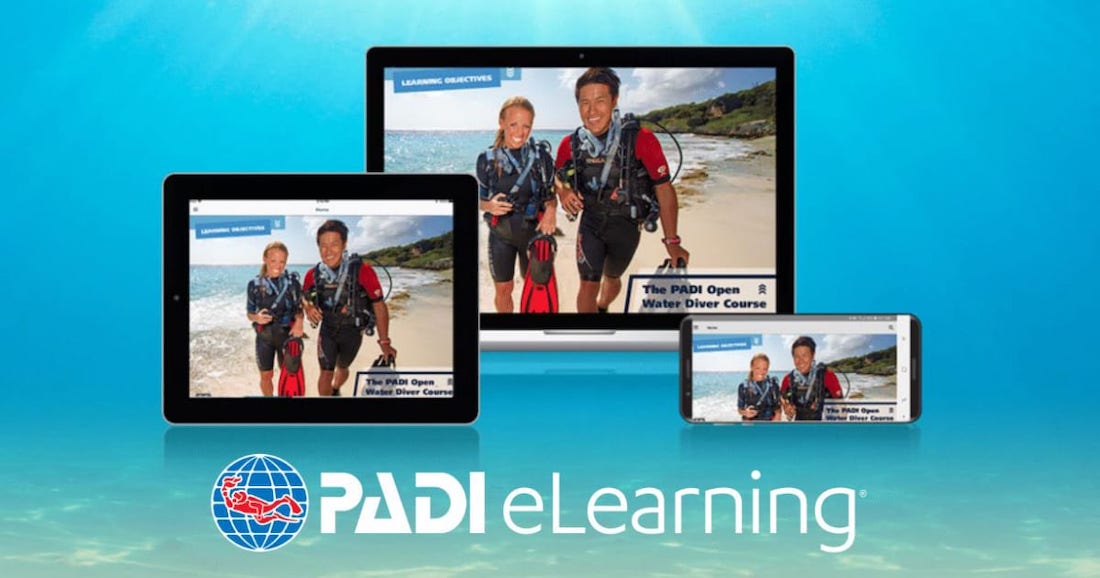
PADI E-Learning Course Offerings: Recreational, Specialty, and Pro Levels
Courses available online include PADI Open Water, Advanced Open Water and Rescue Diver courses (including Emergency First Response) and there are also many specialty courses available. The most popular specialty certifications for Koh Tao are undoubtedly the Enriched Air Diver (Nitrox), Deep Diver and Wreck Diver certifications. All of these have an eLearning option, some of them in languages other than English, and many other PADI Specialty courses can also be started online. On top of all that, there is eLearning available for Pro Level courses, notably the PADI Divemaster (DM) course and Instructor Development Course (IDC).
PADI Pro Level E-Learning
The Divemaster eLearning includes all sections from the DM manual and the part 1 & 2 exams. The IDC eLearning contains 15 subjects that are all completed online. The shift to eLearning has freed up more time for practical workshops and dry presentation practice. There is also the Dive Theory Online eLearning product that is a very useful tool for both aspiring PADI Divemasters and Instructors. This eLearning program takes you step-by-step through dive physics, physiology, skills, equipment and environment, plus a Recreational Dive Planner (RDP) review.
FREE PADI Open Water E-Learning Introduction
If you are interested in starting diver education through PADI eLearning, get in contact with us and we can send you a PADI Open Water eLearning intro free of charge. You will get a chance to see how the eLearning platform works, how it is set up and there is a lot of information and visual content available. In total, it will take about 30–45 minutes to go through the interactive introduction to the world of scuba diving and it will give you a clear insight on what the PADI Open Water course entails.

Online Interactive PADI Diving Course
The eLearning option is a perfect way for aspiring scuba divers to learn more about what they can expect by taking a scuba diving course. There is an introduction to the PADI Open Water course and it will be explained how the training and certification takes place. Next, you will get a full overview of the course and a brief look at some of the skills and hand signals you will be learning as a student diver. Finally, there is a section that talks about how you can get the most out of your PADI Open Water course.
Become an Underwater Ambassador with PADI E-Learning
As scuba divers we are all Underwater Ambassadors who have a responsibility to protect and conserve our ocean planet, in addition to exploring and enjoying it. The PADI online elearning portal gets you off to a great start in the comfort of your own home and gives you more time to enjoy the diving when you arrive at your chosen destination. More than 70% of the planet we live on is covered with water, opening up an abundance of opportunity for scuba divers to explore. Sign up for your FREE Open Water intro NOW and find out what all the fuss is about.
10 Scuba Diving Signals Every Diver Needs to Know

Scuba Diving Predive Buddy Safety Check
BOOK COURSES – PRICES