Koh Tao Deep Diving Dive Sites
The island of Koh Tao has long been known as the most popular destination in the world to learn to scuba dive.
Surrounded by 8 kilometres of coral reef, with an abundance of diverse marine life and over 30 dive sites to choose from, Koh Tao caters to the needs of all divers.
Visitors to Koh Tao who want to learn to scuba dive, soon discover the most difficult part of their trip is to fit everything in. Whether you’ve just taken your first breaths underwater or you’re visiting the island to explore its reefs, there is always a new dive site waiting to be discovered.
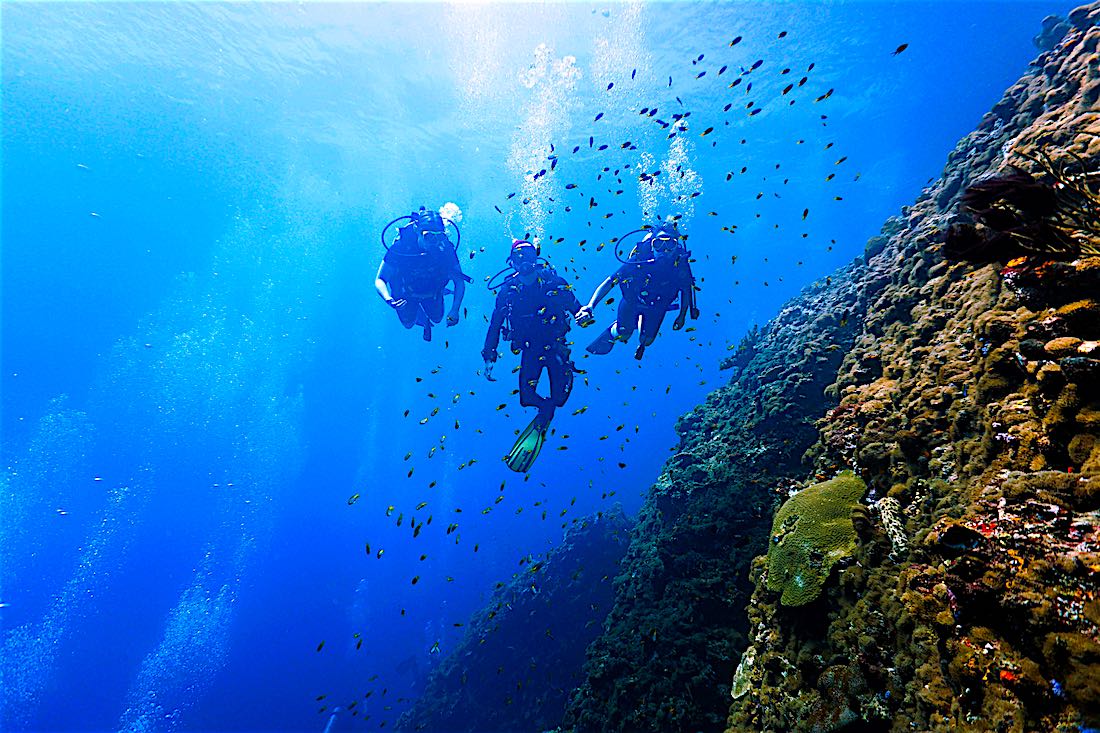
Explore Deep Dive Sites on Koh Tao
From beginner scuba divers to professional level scuba divers, there is often a natural fascination with exploring the ocean at greater depths. In many ways, divers can be compared to weightlifters training to lift heavier weights—once they reach one goal, they set a new one. Scuba divers are much the same, except instead of chasing heavier lifts, they are often chasing deeper dives.
Explore Greater Depths in the Ocean
Our curiosity to explore the ocean pushes us to expand our skills and knowledge so that we have a larger area of the underwater environment in which to explore.
Everyone who learns to scuba dive will initially be limited to a maximum depth of 18m/60ft and for many, it is enough to explore tropical coral reefs while on a relaxing vacation.
But what if you are someone who wants to explore the deeper parts of a dive site? Or the outside of a deeper lying, sunken shipwreck?
The answer is to become a PADI Advanced Open Water Diver and then a PADI Specialty diver. The combination of these two powerful PADI diving courses is your key to exploring most of the dive sites around the world.
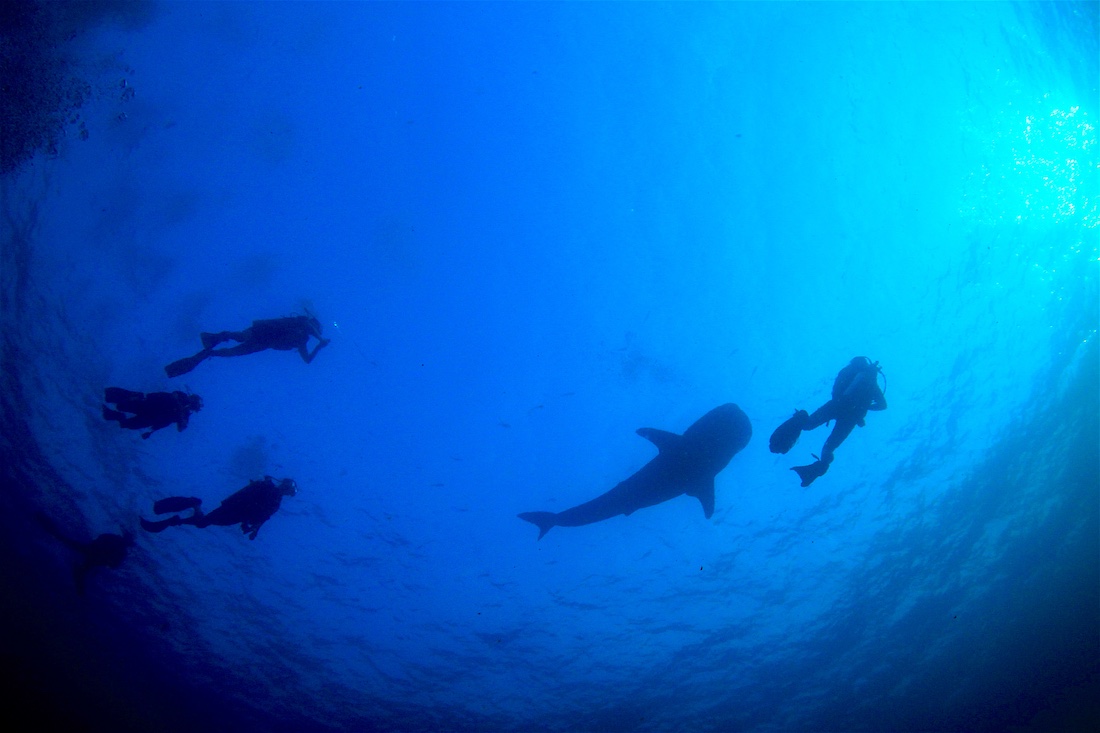
What is Deep Diving?
Deep diving generally refers to any dive deeper than 18m/60ft. In PADI terms, a deep dive is any dive between 18m/60ft and 40m/130ft. Since 40m/130ft is the maximum depth for recreational scuba diving, going beyond this requires additional technical diving training.
Deep dives are different because they come with extra safety considerations that are not usually present on shallower dives. The deeper you go – and the longer you stay there – the more nitrogen your body absorbs. This means divers need to carefully monitor their no-decompression limit (NDL), which is the amount of time you can safely stay at your current depth without needing mandatory decompression stops.
Your dive computer tracks this for you and you are taught how to monitor your computer. Through theoretical and practical application you will learn to understand how your available NDL time decreases as you descend and increases again as you ascend.
Staying within these limits is essential, as exceeding them means entering decompression, requiring extra stops on your way back to the surface for safety.
Planning Deep Dives
Accidentally entering decompression during a dive that was planned as a no-decompression dive can create serious problems. It means you will need to make unplanned decompression stops on your ascent, which can leave you low on breathing gas – a major concern for any responsible diver.
Staying within your NDL limits is essential, as exceeding them is not acceptable during standard recreational no-decompression diving.
Another important factor in deep diving is Nitrogen narcosis. This is a temporary change in awareness and behaviour caused by breathing compressed gases at depth. Every diver planning a deep dive should understand its potential effects.
While it is not physically dangerous to be in a state of nitrogen narcosis, it can slow your thinking, affect decision-making, and leave you feeling confused or unfocused underwater. Fortunately, the symptoms are usually easy to manage – simply ascending a meter or two and taking a few breaths often clears the effect quickly.
Why Should I Become a Deep Diver?
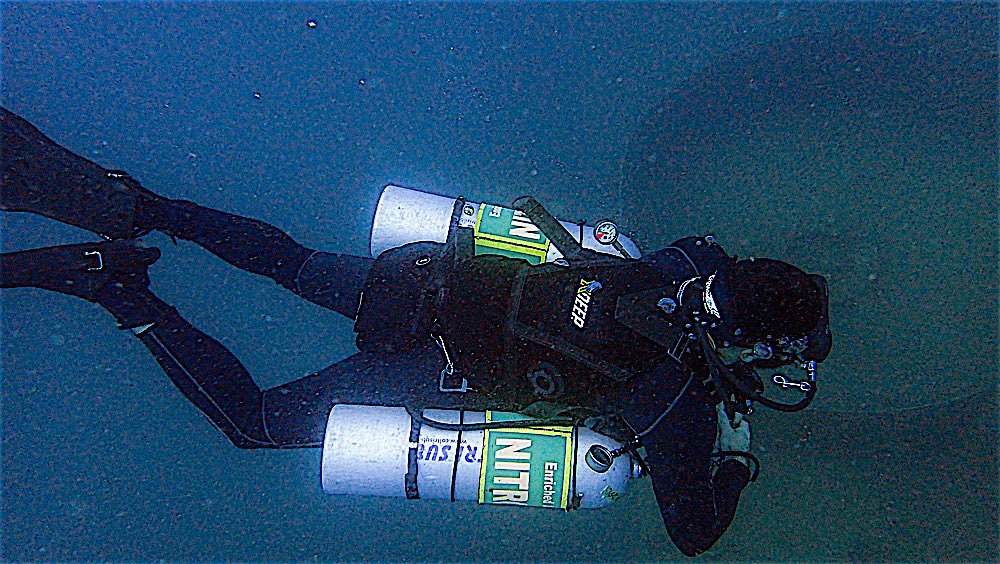
Every diver at some point will find themselves on a dive site, locked at their maximum depth, looking at something below them, and thinking “I would love to be able to go and see what that marine animal is.”
This is why you should take additional training and become a deep diver. Having the additional certifications will give you access to an expansive and incredible new underwater world to explore.
The deeper you go, the more the topography and marine life changes and there are lots of Benthic dwellers and amazing marine life living below 18m/60ft.
If you are an enthusiastic PADI Open Water Diver, you should also consider becoming a deep diver for the additional skills our advanced courses teach you.
Understanding how your depth and time affect you and your dive, being able to navigate underwater, and having better buoyancy control, all help you become a better scuba diver, even if you stay shallower than 18m/60ft.
Our Best Deep Dive sites around Koh Tao
1. Chumphon Pinnacle deep dive site
Min depth: 14m/45t
Max depth: 36m/118ft
Minimum certification: PADI Advanced Open Water Diver
Distance from Koh Tao: approx. 10km to the NW
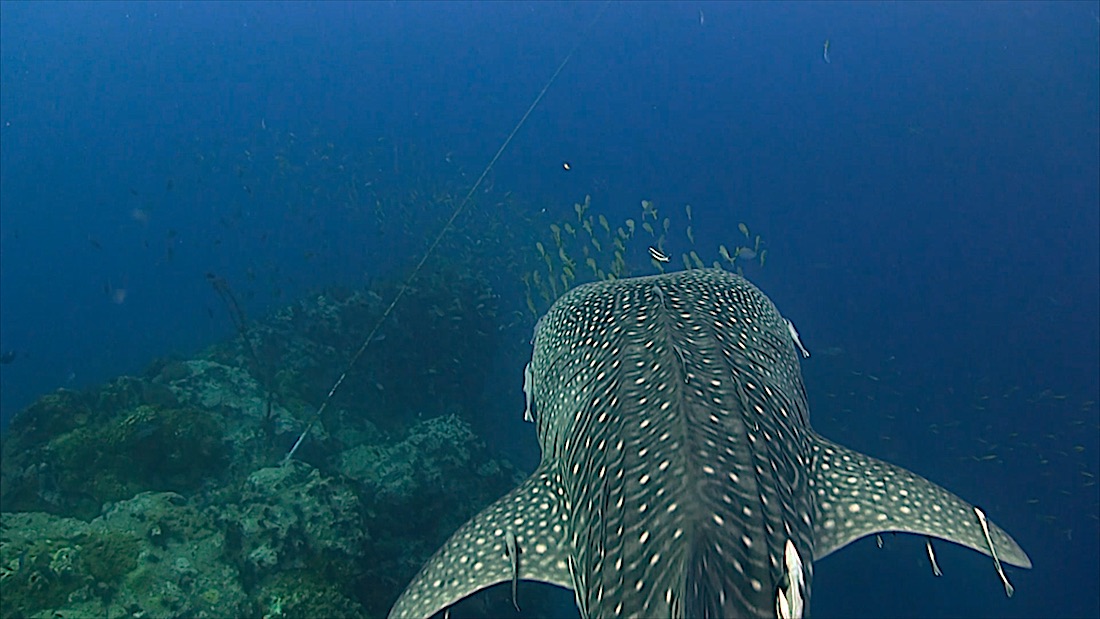
Key marine life: Barracuda, Batfish, Whalesharks & Giant Groupers
Chumphon Pinnacle is our most popular dive site and the local population of Koh Tao affectionately refer to it as ‘Chumps’.
Every morning, numerous dive boats from Koh Tao make the 45-minute journey to the submerged granite rock pinnacle and divers start entering the water as early as a few minutes after sunrise.
Many Koh Tao dive shops schedule Chumphon Pinnacle first thing in the morning, as per the recommendations to complete your deepest dive of the day first.
However, if you sleep in and catch a boat heading out to Chumphon in the afternoon instead, you may have the whole deep dive site to yourself.
Koh Tao Deep Dive Sites – Chumphon Pinnacle
Chumphon is one, large granite rock pinnacle with a few splits in the rock here and there and with good visibility, it is an imposing sight when you are descending from the surface.
Almost the entire top of the pinnacle is carpeted in soft, pink anemones that house a huge number of small and adorably aggressive anemonefish.
The sides of the pinnacle are loaded with small cracks and if you shine your torch, you may just find a moray eel looking back at you or a couple of snappy-looking crabs or shrimps.
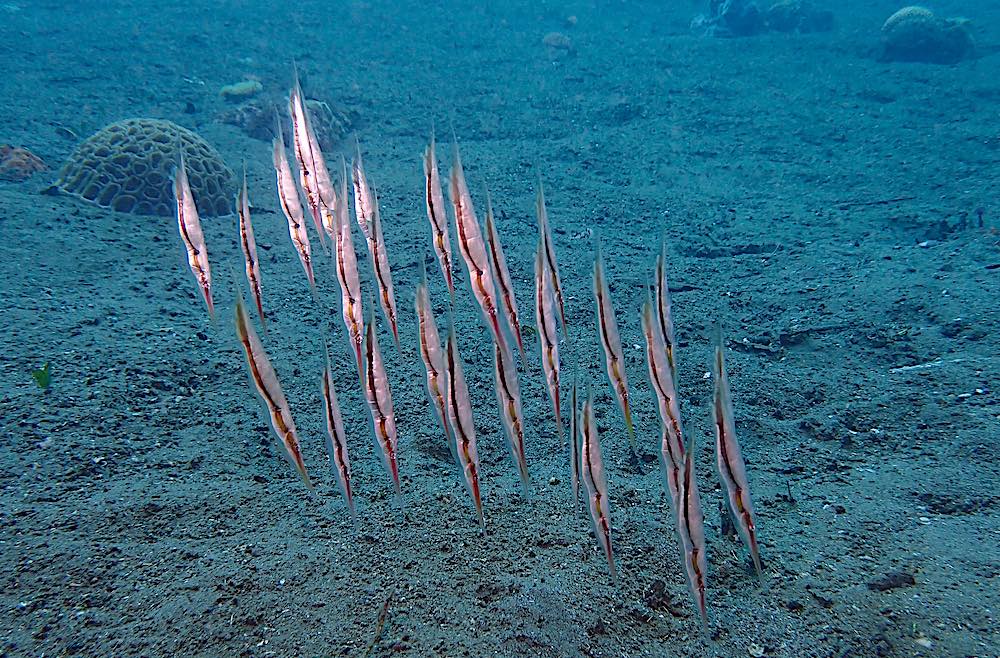
The sand around the pinnacle is a great place to watch schools of razorfish swim around with their noses pointed downwards, almost like they have not figured out how fish are supposed to swim.
Abundance of Marine Life
It is also a great place to stare at the sea urchins and wonder how and why they seem to line themselves up in neat little patterns on the sea floor.
Chumphon Pinnacle dive site is a great place for a sunset dive and a night dive. Because the location is quite distant from Koh Tao, predators arrive at the rock pinnacle to feed after dark, and they are extra big and extra hungry.
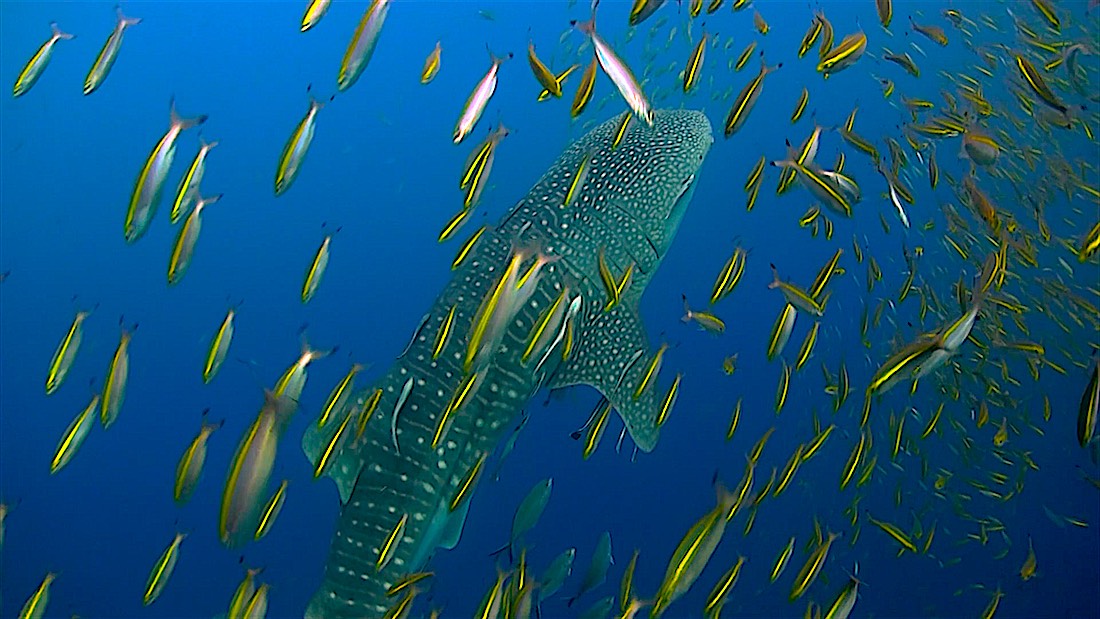
You can see everything from an octopus chasing a crab over the field of anemones, to giant barracuda terrorizing schools of fusiliers. And since Chumphon is the dive site where we have the most whale shark sightings, a night dive here can get you the biggest scuba diving bragging rights of all – night diving with a whale shark.
Barracuda Rock at Chumphon Pinnacle Dive Site
Special treat: Barracuda Rock is situated just off the South West corner of Chumphon Pinnacle and is often home to huge schools of fusiliers and impressive-looking barracuda.
If visibility is not great, follow a compass heading of 220 degrees from the southeast corner of Chumphon Pinnacle to find Barracuda Rock.
Hot tip: Do not ignore the sandy areas at 30m around Chumphon Pinnacle. You may get lucky and see a large pipefish pretending to be a stick, or even a shark cruising silently across the bottom.
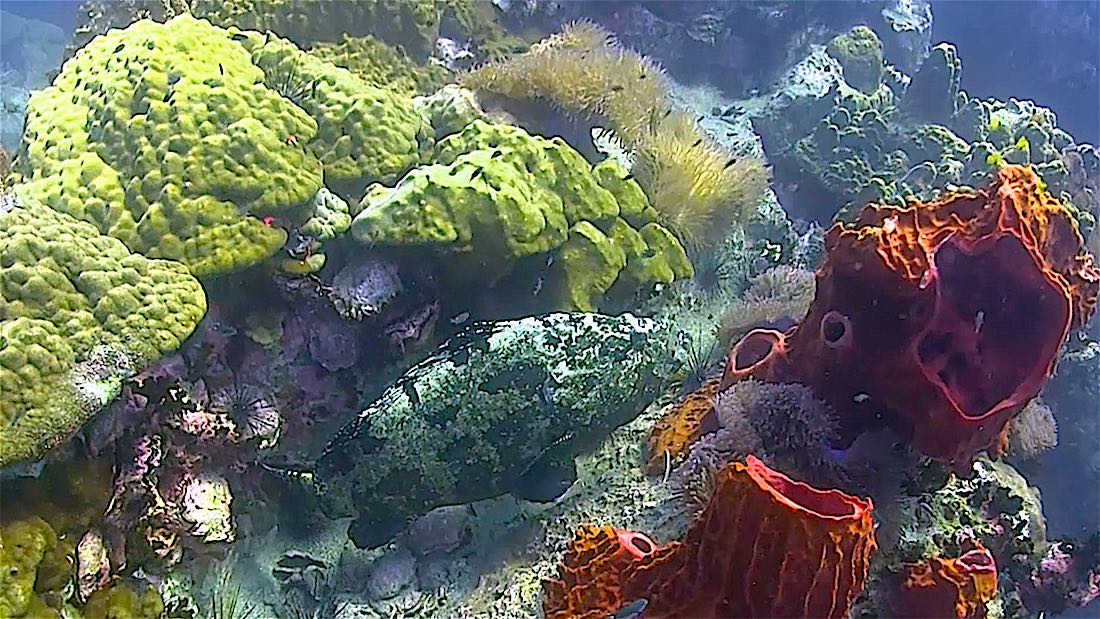
2. Southwest Pinnacle deep dive site
Min depth: 5m/16ft
Max depth: 30m/100ft
Minimum certification: PADI Open Water Diver
Distance from Koh Tao: approx. 7km to the SW
Key marine life: Whale sharks, giant green moray eels, anemones
Southwest Pinnacle is another favourite among scuba divers and offers a deep diving experience similar to Chumphon Pinnacle, but with its own unique character. While both sites are known for dramatic granite formations and rich marine life, Southwest stands out for its more varied topography and the presence of a separate sister pinnacle located further away from the main site, adding an extra sense of exploration to every dive.
The dive site is centred around one main rock pinnacle, surrounded by smaller granite outcrops stretching to the east and west. This staggered layout creates a beautiful underwater landscape of different depths, swim paths, and open spaces, making the site feel expansive and dynamic. Divers can move between formations while constantly discovering new marine life tucked into the cracks and overhangs.
When visibility is good, Southwest Pinnacle is truly breathtaking. The open arrangement of the rocks allows you to take in huge sections of the reef from almost any point, with schools of fish moving effortlessly between the pinnacles. The bright white sand that surrounds the site reflects the sunlight beautifully, creating a glowing, almost surreal atmosphere. On calm, clear days, Southwest can feel like an underwater paradise—peaceful, bright, and unforgettable.
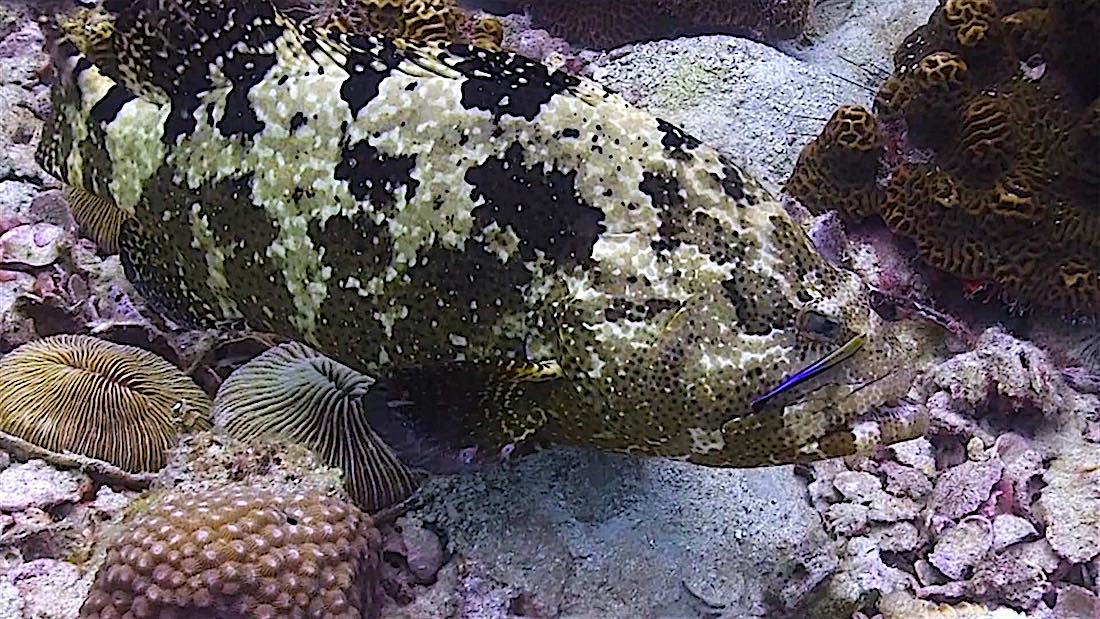
Deep Open Water Dive Site
As a deep open water dive site, Southwest Pinnacle is also one of the places where divers have a good chance of encountering larger pelagic life, especially whale sharks during certain times of the year. These unforgettable sightings are part of what makes the site so special, turning an already exciting dive into something truly extraordinary.
For the luckiest groups, the adventure can begin even before entering the water. On rare occasions, pods of Bryde’s whales have been spotted surfacing on the journey to and from the site, and sometimes even near the boat as divers prepare to descend. Seeing Bryde’s whales is a rare privilege – and spotting one while diving is even more exceptional – but it has happened, and those stories quickly become legendary among divers on Koh Tao.
One of the most interesting yet often overlooked parts of Southwest Pinnacle lies on the southwest side of the site—a scattered rubble field resting at around 30m. At first glance, it may seem unremarkable, but experienced divers know that marine life loves to hide in the smallest spaces.
If you take the time to look closely and shine your torch between the rocks, you may be rewarded with the sight of a large green moray eel staring straight back at you. And honestly, who doesn’t love meeting a sea monster on a deep dive?
Secret Pinnacle at South West Dive Site
If you spend a lot of time scuba diving and deep diving around Koh Tao, you may want to explore other areas of the dive site.
The beauty of this deep open water dive site, however, is that it has a sister dive site called Secret Pinnacle, which is big enough to be a deep dive site all on its own.
To find the Secret Pinnacle, descend on the east buoy line and follow a compass heading of 120 degrees once you have the bottom in sight. If you see a tyre half covered in sand and empty wine bottles, you are heading in the right direction.
It should take you about 5 minutes of swimming to find the Secret Pinnacle but be careful not to spend too much time exploring. If your NDL time is too low for your return, you may not be able to keep the bottom in sight or stay at a safe depth.
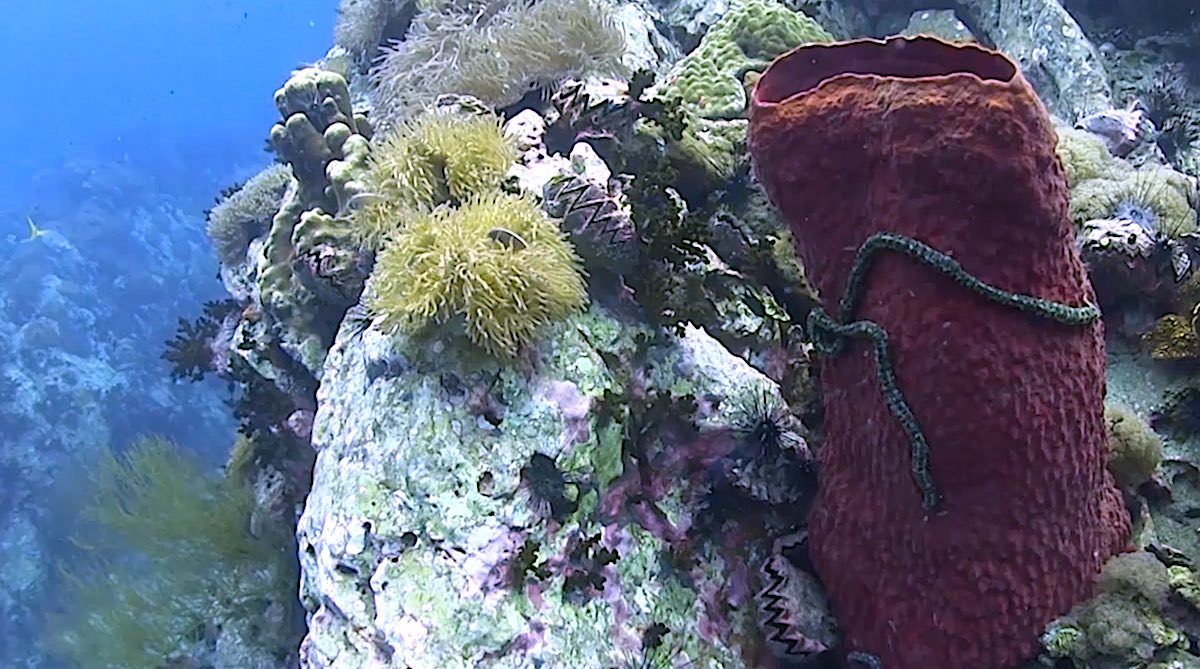
Koh Tao Deep Dive Sites – South West Pinnacle
In conditions where there is a current or bad visibility, this may result in you missing Southwest Pinnacle upon your return.
Special treat: Squid love Southwest Pinnacle almost as much as our divers. Do your safety stop near (but at a safe distance from) the dive boat and keep your eyes open for large squads of squid using the boat as cover.
Hot tip: Ascend towards your safety stop around the main pinnacle so that you get every last second out of your dive. Keep your eyes open for the yellow boxfish that lives in the cracks.
3. Sail Rock deep dive site
* the best dive site in the Gulf of Thailand
* the most requested dive site on our boat schedule
Min depth: 0m/0ft
Max depth: 40m/130ft
Minimum certification: PADI Advanced Open Water Diver
Distance from Koh Tao: approx. 25km south east of Koh Tao
Key marine life: Giant groupers, large schools of Barracuda, Snapper & fusiliers.
Seasonal whale sharks
Sail rock is one of the most iconic dive sites in the Gulf of Thailand and is often considered the best dive site in the region. This dramatic granite pinnacle rises an impressive 8 metres above the surface, standing alone in open water like a landmark for divers heading offshore. Beneath the surface, the rock drops steeply to around 20 metres where it meets the sandy seabed, before the sand slopes further down toward several outer rock formations reaching depths of more than 35 metres.
The closest of these formations lies to the southeast, with two additional outcrops stretching to the west and south, creating an expansive dive site with plenty to explore. Its size, depth variation, and unique layout make every dive here feel different, whether you are circling the main pinnacle or venturing further out to the deeper surrounding formations.
Located around 25 km south of Koh Tao, roughly halfway to Koh Phangan, Sail Rock is about a 75-minute boat journey from the island. Its isolated position in open water allows strong currents to sweep around the pinnacle, bringing nutrients that fuel an incredible concentration of marine life.
This is what makes Sail Rock so unforgettable – the sheer abundance of life. From huge schools of fish moving in every direction to larger pelagic visitors passing through, the site feels constantly alive and full of energy.
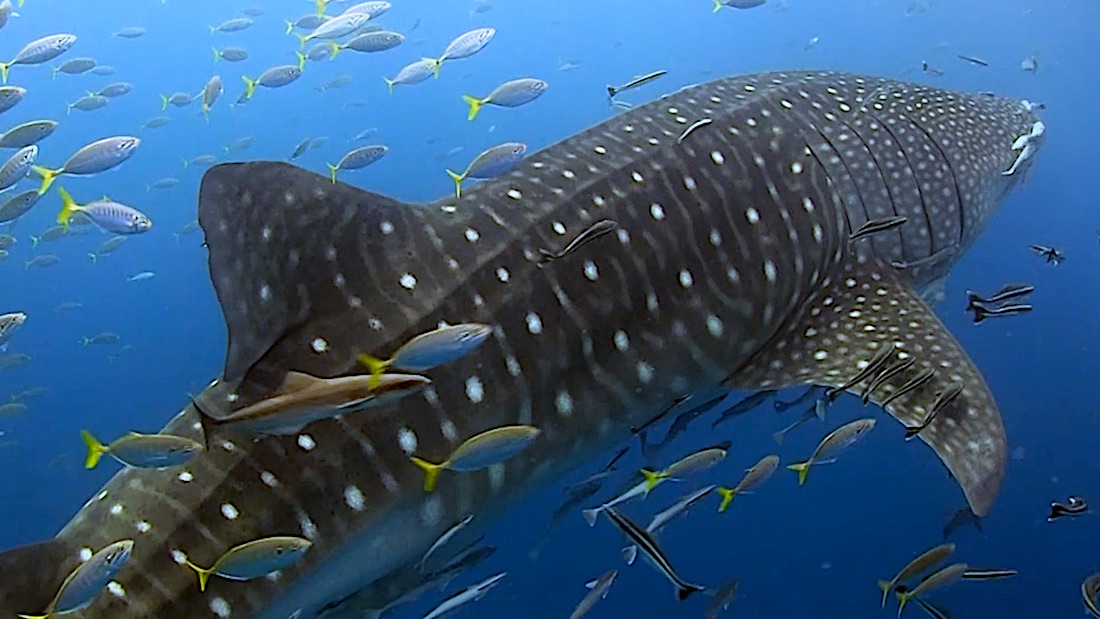
Whale Sharks at Sail Rock
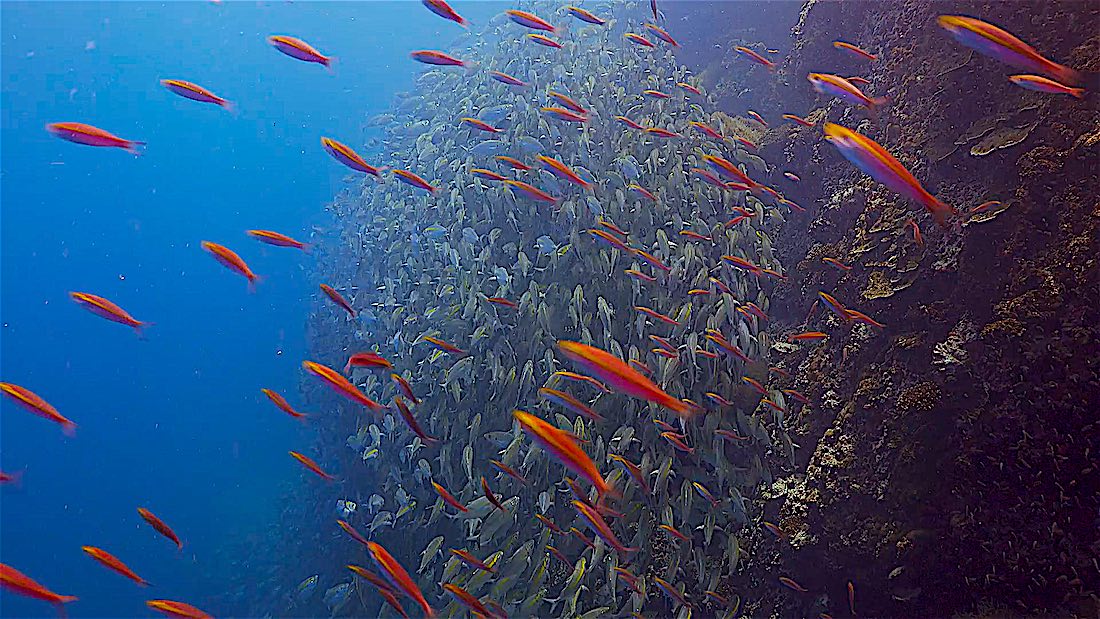
Huge schools of Big eye trevally form large moving silver walls, shimmering from the rays of the sun, which pierce through the clear water.
Swirling tornadoes of yellow tailed fusiliers engulf huge areas around the rock, moving suddenly, almost as one when larger pelagic predators move in for a feast.
You will also see Yellowtail and chevron barracuda, moving around the rock in large numbers, often slower and more uniformed than other schooling species but no less spectacular.
The dive conditions at Sail Rock are variable from day to day, dive to dive and even sometimes within one dive. On occasions there is a strong current on one side of the rock but no current on the opposite side.
Likewise, the visibility can change as you navigate around the dive site, improving or deteriorating at each corner. This means even in generally poor dive conditions you can still find a sheltered corner of Sail Rock.
Koh Tao Deep Dive Sites – Sail Rock
One of the great features of Sail Rock is ‘The Chimney’, a vertical ‘swim thru’ with the entrance at 6 metres, one exit around 12 metres and a second exit at 18 metres.
Confident divers with good buoyancy control can navigate this as part of their initial descent. The opening is surrounded by lobe coral, some covered in Sea Anemones that are home to the Pink Anemone fish.
Slowly moving down through the chimney, you can see soldierfish and smaller groupers hiding in the shadows.
The dive site itself is easy to navigate, with divers dropping down to their maximum depth before circling around the rock as you gradually ascend throughout the dive.
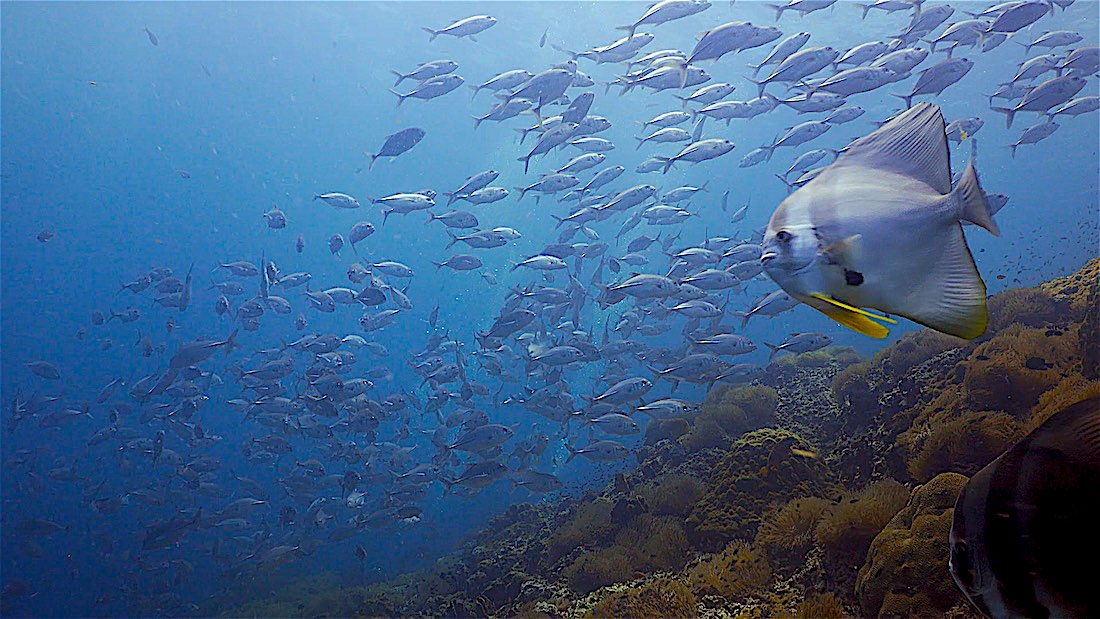
Best Deep Dive Site in the Gulf of Thailand
At the deeper depths you will see large Malabar and Brown Marbled groupers, especially on the south west side of the rock where they tend to congregate as they look for easy prey. Here you will also see solitary Giant Barracudas looking at getting in on the feeding action too.
A closer inspection of the rock will reveal shrimps, stonefish and several popular species of nudibranch, as well as Giant and white eyed moray eels with their heads protruding out from hidden places.
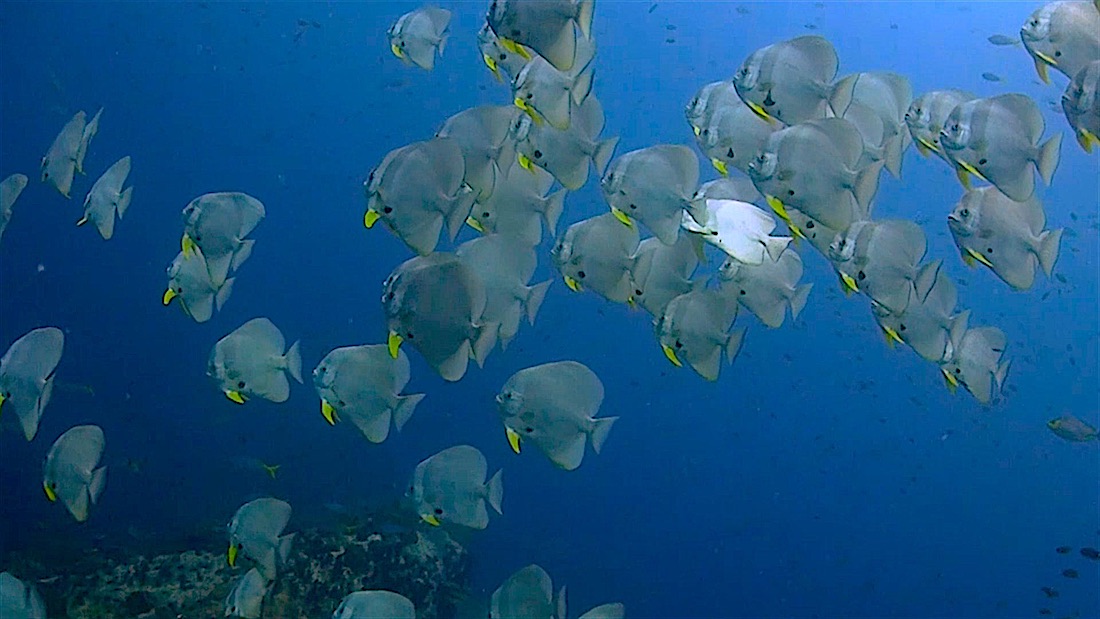
There is a large school of Teira (Tailfin) Batfish which you can often see on the north side of the rock.
Special treat: Whalesharks are often seen at Sail Rock, and if you are really lucky you may see an Eagle Ray there occasioanlly as we did on a recent trip there.
Hot tip: Make your descent slowly down the chimney
Our top tips for the 3 best deep dive sites around Koh Tao will leave you wanting more as a recreational deep diver.
If you want to explore a dive site that is not on the daily boat schedules of many dive operators, our recommendation is to find a dive boat that visits Samran Pinnacle.
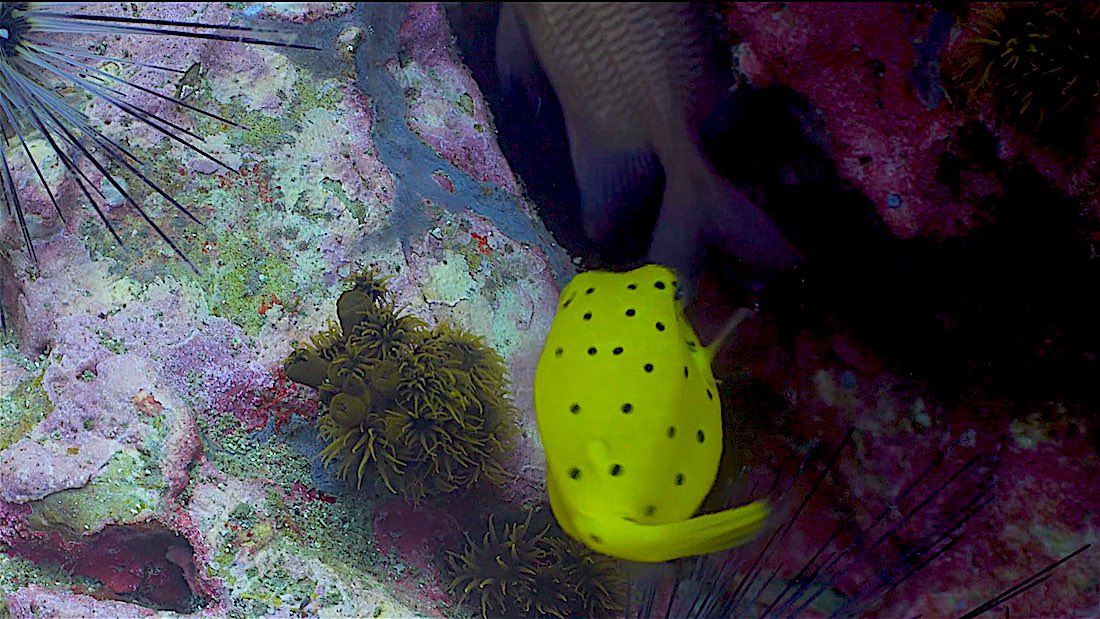
Bonus Deep Dive Site near Koh Tao – Samran Pinnacle
Samran Pinnacle – for experienced divers
Min depth: 13m/42ft
Max depth: 30m/100ft
Minimum certification: PADI Advanced Open Water Diver
Distance from Koh Tao: approx. 7.5km to the south
Key marine life: Nudibranchs of all types
Samran Pinnacle can be a fickle deep dive site around Koh Tao but when it is good, it is really good. The submerged set of three rocky pinnacles lies under the waves roughly halfway between Sail Rock and Southwest Pinnacle.
The granite rock pinnacles themselves are covered in soft corals and sponges and they rise up from the sea bed at 30m to reach a minimum depth of about 13m.
Samran pinnacle is a dive site that should be used by advanced divers that have completed enough dives with good buoyancy control and air consumption.
It is an unmarked dive site, meaning it has no buoy line and the boat captains have to find it using coordinates and depth finders. It is also known for having some of the strongest currents you will find on any dive site in the Gulf of Thailand.
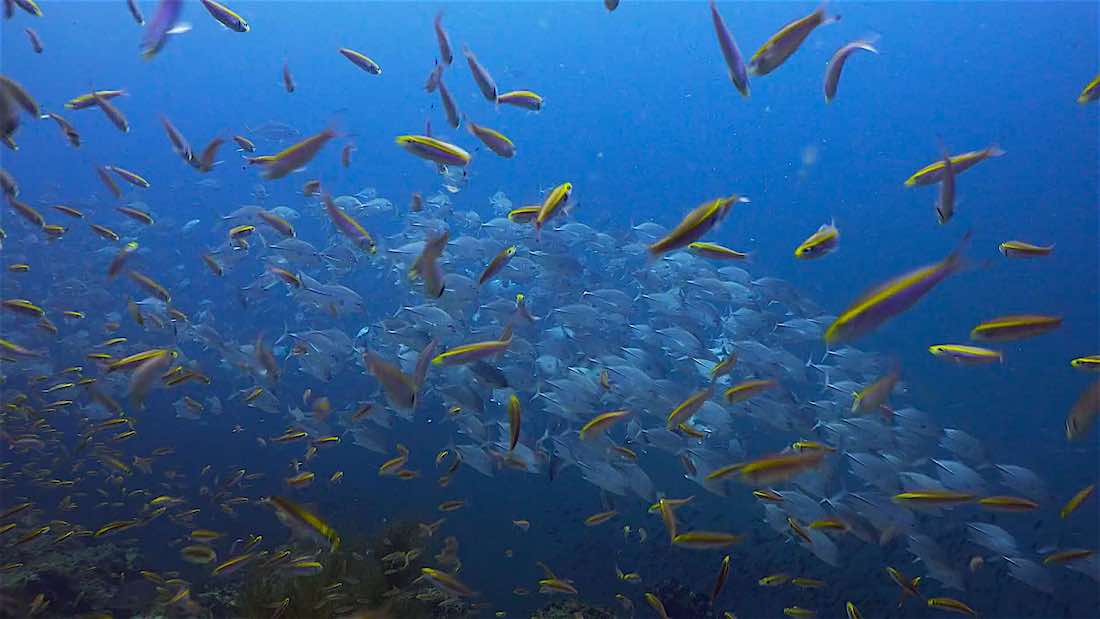
Samran Pinnacle Deep Dive Site on Koh Tao
This means that free descents and free ascents can be particularly tricky for new, inexperienced, or unconfident divers.
Samran Pinnacle has been known to local fishermen for many years and it was an active fishing location for quite a long time. The fishermen fished there for the same reason that we deep dive there – lots of fish use Samran Pinnacle as a rest stop and as shelter from larger predators.
This dive site can often be a ‘fish soup’ and give you the experience of being a marine creature, if only for a short time.
Are you a fan of tiny nudibranchs? Then you will love a deep dive at Samran Pinnacle. Make sure to take your torch and a keen eye for alien-like creatures so that you can comb the sides of the pinnacles looking for nudibranchs that are hard to find anywhere else – like the Phidiana Indica or the Flabellina sea slug.
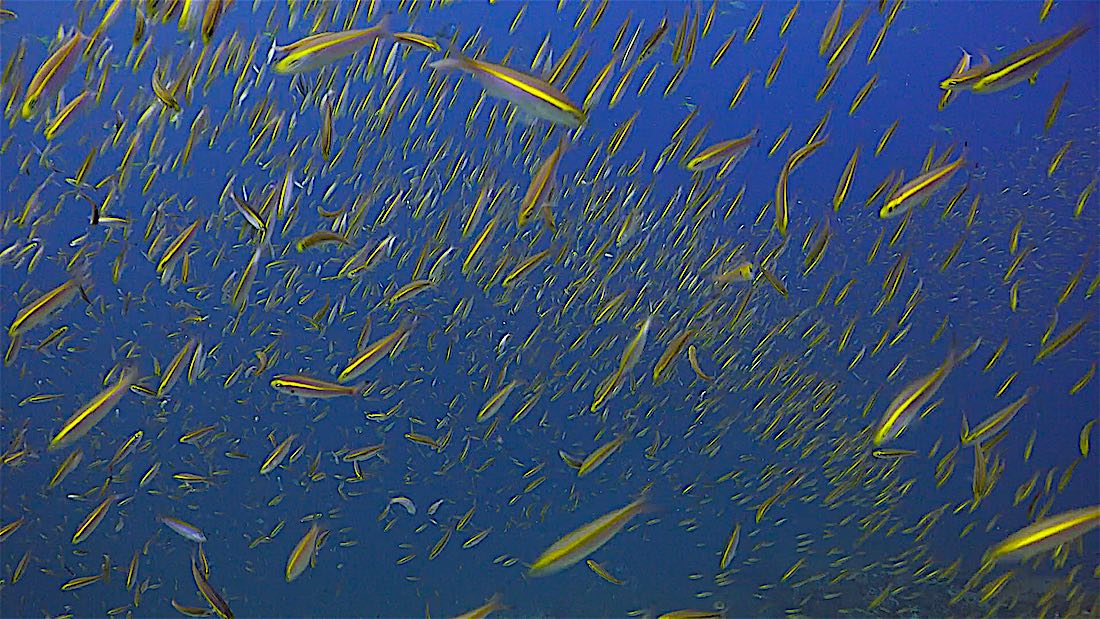
Diverse Marine Life
If you are looking to improve your water entry skills from a boat, Samran Pinnacle is a great place to practice negative entries (if your Divemaster or Instructor agrees, of course).
There is no buoy line for the boat to grab and the dive site often has currents, so divers cannot waste time on the surface otherwise they may miss the dive site in poor visibility.
A negative entry is when you enter the water with an empty BCD (Buoyancy Control Device) and begin your descent immediately.
It is a great skill to learn to help you bypass surface conditions and visit unmarked dive sites, however, it is a skill that should be supervised by a dive professional and performed only by experienced divers.
Indeed, it is a skill that is useful on a scuba diving liveaboard trips to the Andaman Sea and Similan Islands.
Special treat: Very few dive centers on Koh Tao visit Samran Pinnacle so when you are there, you are often the only boat.
Hot tip: Pick up a tank of Nitrox for your dive at Samran Pinnacle. You will appreciate the extended bottom time.
Get Certified to Dive Deeper – PADI Deep Diver Course
Our PADI Deep Diver Course will teach you everything you need to know to safely dive deeper than 18m/60ft, but not deeper than 40m/130ft.
The course takes place over 2 days and includes 3 or 4 deep training dives. It is taught in two sections – class-based knowledge development and actual open water training dives.
At Black Turtle Dive, we take our customer experience very seriously. We build your confidence and competence with new skills and never force you to do something you are not ready for.
Individually, our highly-trained and attentive diving instructors limit student groups to no larger than 4 people and we give you exactly the right amount of personal attention you need to bring out the best in you as a scuba diver.
Prerequisites
- PADI Advanced Diver
- recent diving experience (within the last year)
- minimum 15 years of age
- medically fit to dive.
Interested in upgrading to a PADI Deep Diver? Check out our website for more details on the course itself and get in touch to book your PADI Deep Diver Course today.
Frequently Asked Questions
Where are the best deep diving sites on Koh Tao?
The best deep diving sites are Sail Rock, Chumphon Pinnacle, South West Pinnacle. Whilst divers have their own preferences, in our experience, these are the most popular deep dive sites around Koh Tao.
What is the maximum depth for a recreational deep diver?
40 metres is the maximum depth for recreational deep diving and to go deeper, divers need to get additional training in technical diving.
Is Deep Diving Safe around Koh Tao?
Recreational deep diving is very safe with a dive plan and as long as you follow the extra considerations for divers when diving deeper. Plan your dive and stay with the plan.
How do I become a Deep Diver?
Divers need to learn additional skills as an advanced diver and then consider a deep diving specialty course, which will give you all the knowledge you require to manage and plan deep dives safely.
6 Reasons to become a Sidemount Diver
Best Fun Diving in Thailand
BOOK COURSES – PRICES