Divemaster Dive Leader Skills
Ever dreamed of turning your passion for the ocean into a career? Jumping into the world of professional scuba diving is a life-changing move! The PADI Divemaster course is the first big step on that journey. As a Divemaster, you’ll be the heartbeat of the dive center, managing logistics at world-class sites and helping instructors during PADI training programs.
Role of a PADI Divemaster
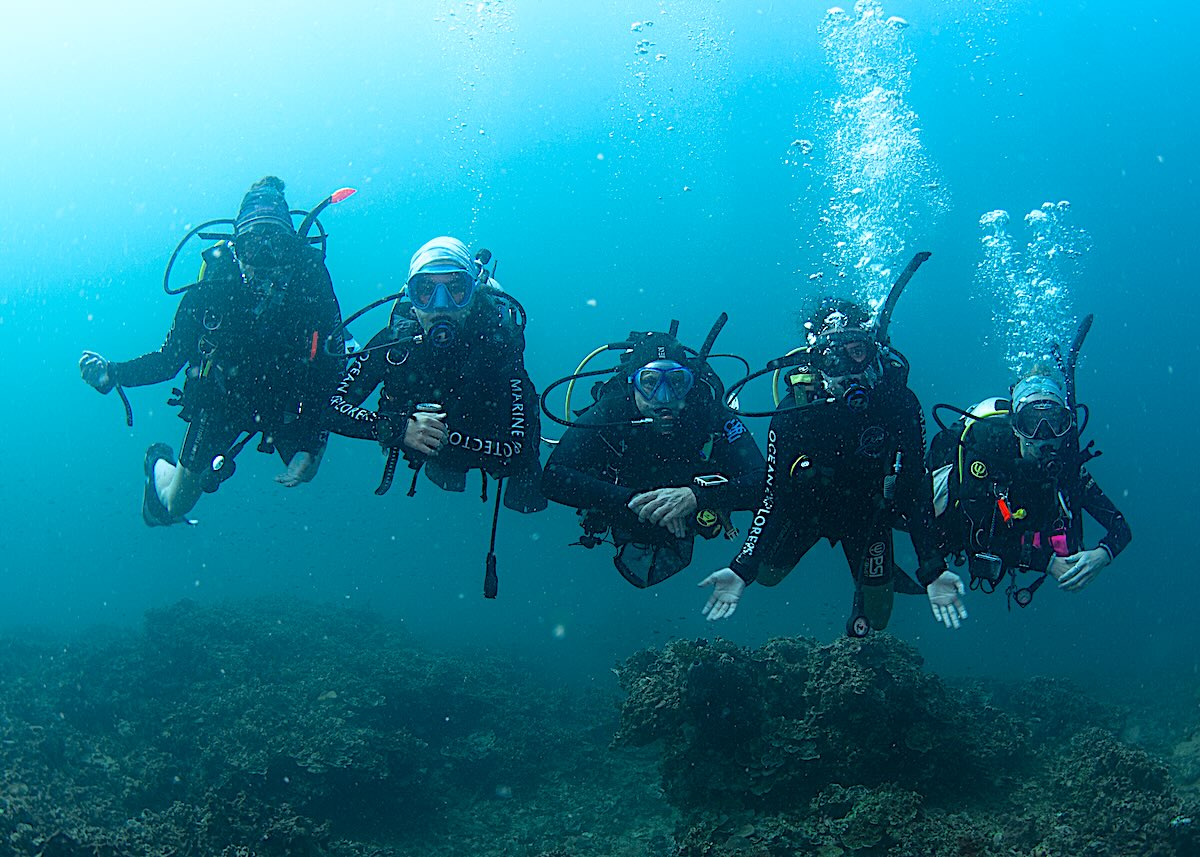
Think of a PADI Divemaster as the ultimate mentor and technical pro. You’ll learn to handle the “behind-the-scenes” magic, from briefing excited divers to supporting their growth underwater. If you’re ready to take the plunge, here’s a look at the fun and focused training PADI Divemaster candidates go through with PADI.
Dive Site Set Up, Management and Briefings
A great dive day feels effortless, but that’s because a Divemaster is working hard! You’ll master how to run the show on boats or from the beach. This includes getting equipment ready, prepping emergency first aid kits, and keeping things organized with boat manifests.

Divemaster Dive Briefings
Briefings are your chance to shine! You’ll learn to explain the site’s layout, point out cool marine life, and ensure everyone knows the safety standards and procedures. A clear, friendly briefing makes divers feel at ease and ready for fun.
Deliver Clear Briefings
Creating a calm, confident atmosphere for your divers is an essential part of effective dive leadership. When divers feel relaxed and reassured, they are more likely to breathe efficiently, enjoy the experience, and maintain safer diving practices throughout the dive. Delivering high-quality dive briefings is therefore a fundamental skill for any dive professional.
Like many aspects of diving instruction and leadership, conducting effective dive briefings takes time, practice, and experience to refine. Briefings may also vary considerably depending on the dive site, environmental conditions, diver experience levels, and the objectives of the dive itself. The more opportunities you have to deliver briefings, the more naturally and confidently this skill will develop.
As your familiarity with local dive sites grows, so too will your ability to provide informative, engaging, and detailed briefings. Understanding the underwater topography, marine life, potential hazards, and unique features of each site allows you to better prepare your divers and enhance their overall underwater experience.
Neutrally Buoyant Skill Demonstrations
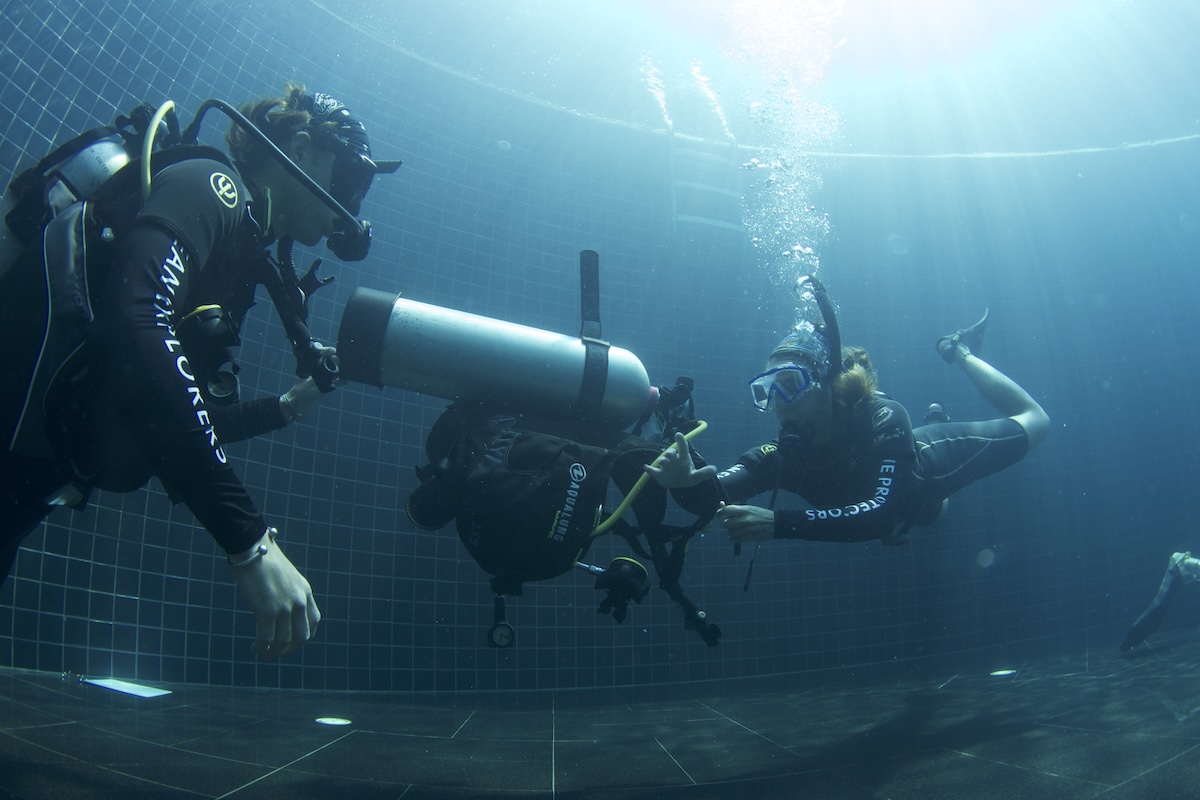
As a Divemaster, you will develop the ability to demonstrate diving skills to students while maintaining neutral buoyancy throughout the performance. Demonstrating skills with this level of control is an essential part of professional diver training, as it not only reflects your own proficiency and confidence underwater, but also sets a positive example for students and certified divers alike. In doing so, you begin to establish yourself as a role model within the diving community.
Performing skills while neutrally buoyant also contributes significantly to diver safety, overall underwater performance, and environmental awareness. Maintaining proper buoyancy control helps minimise contact with the reef and surrounding marine environment, reinforcing responsible and sustainable diving practices.
As a dive professional, other divers will naturally observe and learn from your behaviour underwater. Demonstrating skills with precision, control, and strong buoyancy reinforces the high standards and best practices that should be upheld throughout the scuba diving industry.
Neutral Buoyancy and the Eco-system
The underwater realm is as breathtaking as it is fragile. A single misplaced fin kick can instantly shatter years of delicate coral growth, leaving permanent scars on some of our planet’s most critical marine ecosystems.
As dive professionals, our primary line of defense for the environment is flawless buoyancy control. Performing every skill with absolute neutral buoyancy minimizes our physical footprint, preventing contact with marine life and keeping delicate benthic sediment from being stirred up.
It also carries an immense instructional weight. Leadership is purely observational; when a Divemaster or Instructor frequently touches the bottom, they unintentionally give student divers silent permission to do the same. By maintaining perfect trim and buoyancy, we don’t just protect the reef—we actively mentor the next generation of eco-conscious divers and prevent the cycle of bad habits before they start.
PADI Divemaster Skills
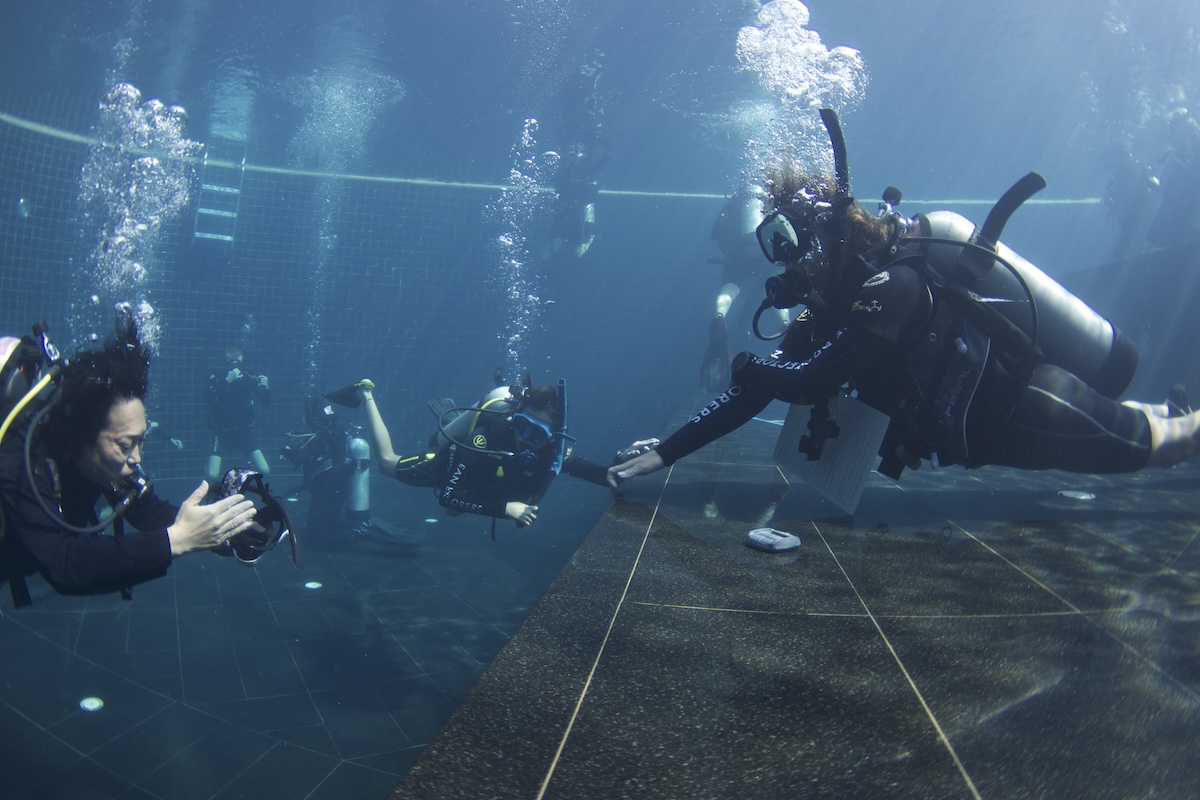
During the course, PADI Divemaster candidates practice a set of skills until they’re perfect. Here’s what you’ll be working on:
- Equipment assembly, adjustment, preparation, donning and disassembly.
- Pre-dive safety check (BWRAF).
- Deep-water entry.
- Buoyancy check at surface.
- Snorkel-regulator/regulator-snorkel exchange.
- Five-point descent, using buoyancy control to stop descent without contacting the bottom.
- Regulator recovery and clearing*.
- Mask removal, replacement and clearing*.
- Air depletion exercise and alternate air source use (stationary).
- Alternate air source-assisted ascent.
- Free flowing regulator breathing.
- Neutral buoyancy, rise and fall – using low pressure inflation.
- Five-point ascent.
- Controlled Emergency Swimming Ascent.
- Orally inflate BCD to hover for at least 60 seconds.
- Underwater swim without a mask.
- Remove and replace weight system underwater.
- Remove and replace scuba unit underwater.
- Remove and replace scuba unit on the surface.
- Remove and replace weight system on the surface.
- Surface dive while skin diving and clear snorkel using blast method upon surfacing.
- Disconnect low-pressure inflator.
- Re-secure a loose cylinder band.
- Perform an emergency weight drop.
Discover Scuba Diving (DSD) Workshops
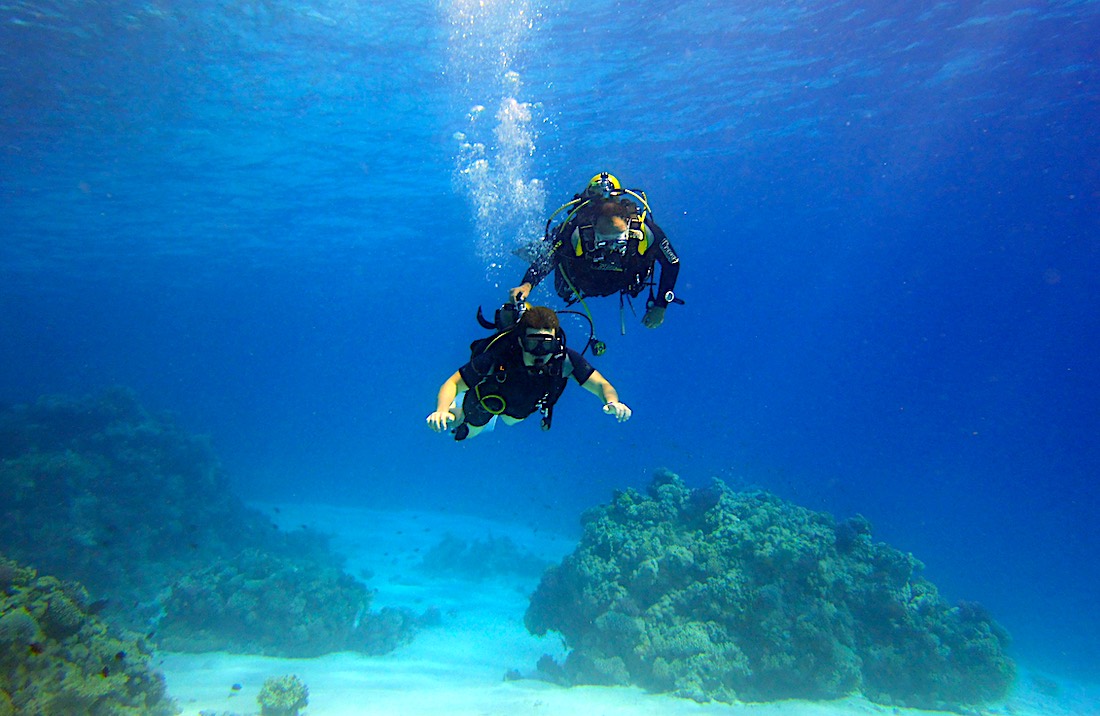
For countless people, the Discover Scuba Diving experience serves as their absolute first introduction to the wonders of the underwater world. It offers a thrilling, low-pressure opportunity to experience the unique sensation of breathing underwater without committing to a full Open Water Course. Acting as a perfect “taster” session, it sparks a lifelong passion for ocean exploration in many who try it.
Because DSDs are such a vital pipeline for new divers, mastering how to assist with these experiences is a foundational pillar of your professional Divemaster training.
While Divemasters are not certified to conduct or lead a DSD independently, their presence as an assistant to a diving instructor is invaluable. This is especially true when managing larger groups or supporting individuals who may feel anxious or less confident in the water. By actively assisting during a DSD, a well-trained Divemaster dramatically elevates the overall quality of the program—offering personalized, one-on-one attention that ensures every student feels safe, supported, and inspired by an experienced professional.
Discover Scuba Diving Experience
Joining dive instructors on a Discover Scuba Diving experience is one of the fastest ways for a Divemaster to accelerate their own professional growth. It serves as a real-world crucible for sharpening essential leadership, underwater supervision, and split-second problem-solving abilities.
Any Divemaster looking to pursue their diving instructor qualification will also benefit from assisting on a DSD experience, to gain valuable teaching experience that will aid In their transition to instructor-level training. Assisting on DSDs pulls back the curtain on instructional logistics, offering a front-row seat to student psychologies and teaching methodologies that will significantly ease the transition during your Instructor Development Course (IDC).
Ultimately, whether your goal is to pursue instructor-level training or to spend your career guiding certified divers through the world’s most iconic dive sites, mastering the DSD dynamic is essential. It transforms you into a highly versatile, well-rounded dive professional and allows you to play a direct role in inspiring the next generation of ocean explorers.
Divemaster Dive Site Mapping Project
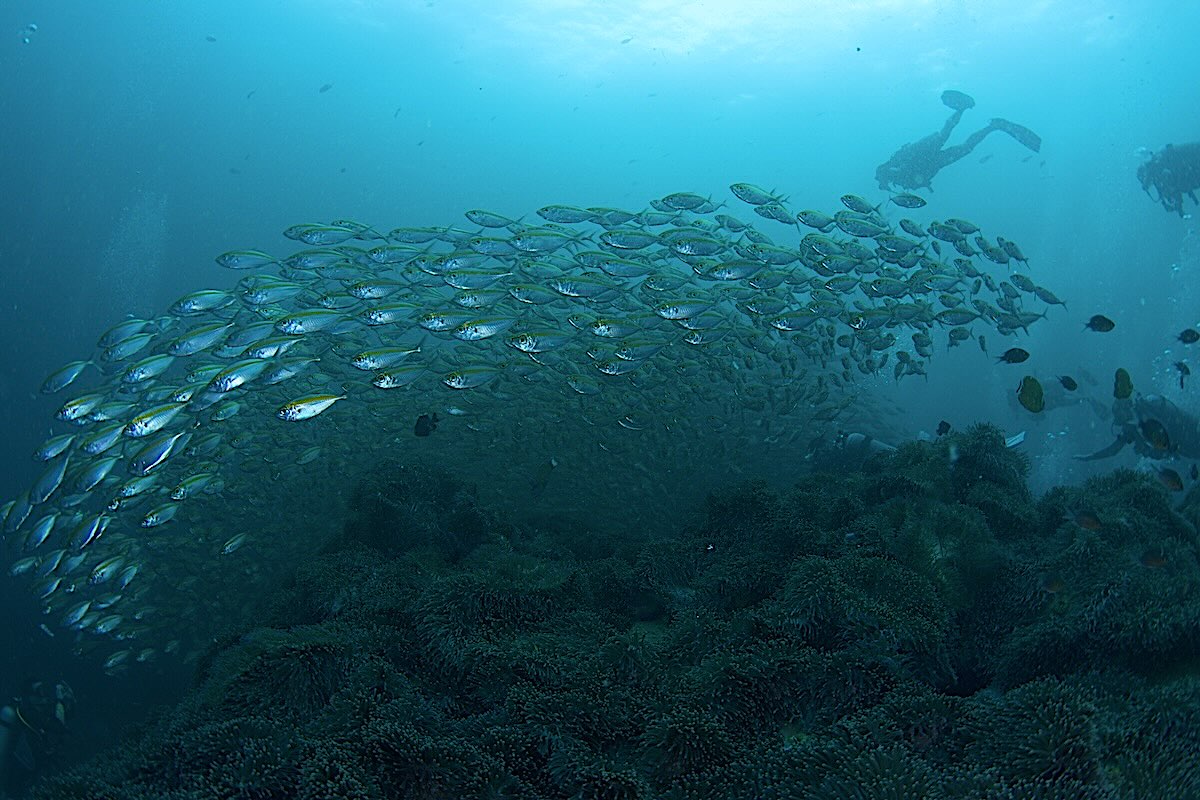
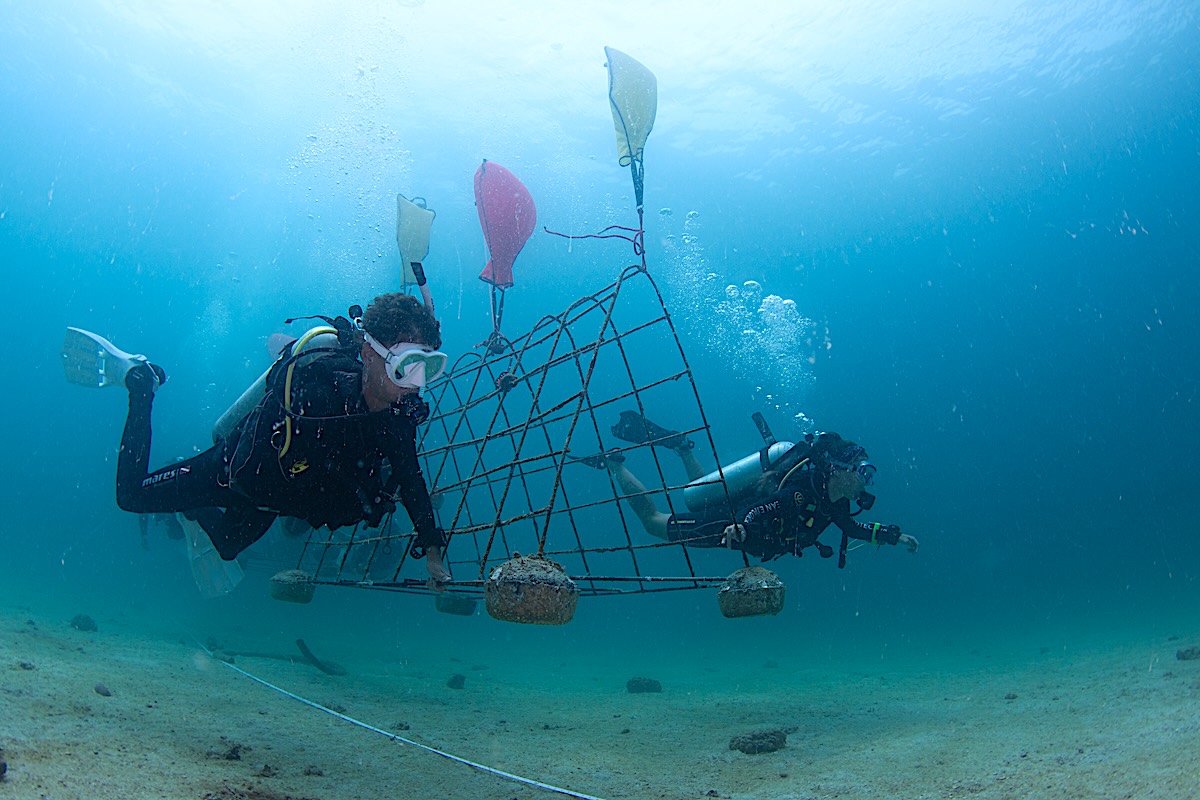
One of the most important abilities within the Divemaster skill set is mastering underwater navigation. As a dive professional, you will be responsible for guiding divers safely and efficiently around dive sites, which requires a strong and detailed understanding of the local underwater environment. Familiarity with key landmarks, underwater topography, entry and exit points, currents, and potential hazards all play an essential role in delivering safe, organised, and enjoyable dives.
For this reason, dive site mapping is a highly valuable skill for Divemasters to develop. Even when working on sites that have already been mapped, practicing underwater mapping techniques can greatly improve your awareness, navigation abilities, and overall understanding of the site. This deeper knowledge ultimately enhances the experience you provide for divers and increases your confidence as a dive leader.
Dive site mapping also relies heavily on effective compass use. Navigating underwater can become challenging, particularly in environments with limited visibility where natural references may be difficult to identify. By learning how to use a compass accurately and confidently, Divemasters can improve the precision of underwater maps while simultaneously developing essential navigation skills.
Visibility conditions are not always ideal on dive sites, and in such situations divers often rely almost entirely on compass navigation. Developing strong navigation techniques and mastering compass use is therefore an essential part of becoming a capable, confident, and reliable dive professional.
Divemaster Search and Recovery Scenario
Ever lost a torch or a mask? Divemasters are the local heroes who find them! You’ll learn how to search the bottom efficiently and use lift bags to bring up heavier items safely.
Search and recovery training is an essential component of Divemaster development. As a PADI Divemaster, you will learn a variety of underwater search patterns designed for different recovery scenarios and environmental conditions. These techniques allow divers to conduct organised and efficient searches while maintaining safety and communication underwater.
For larger or heavier lost objects, Divemasters are also trained in the safe use of lift bags and recovery procedures, often working as part of a coordinated team to retrieve equipment and return it safely to the surface.
Search and recovery skills are not only valuable for your own diving experience, but also form an important aspect of professional dive leadership. Divers who lose equipment during guided dives may look to you for assistance and reassurance. Having the knowledge and confidence to organise an effective recovery operation can greatly enhance both diver safety and customer experience while demonstrating professionalism and competence underwater.
Search & Recovery Skills
Our beautiful blue planet is facing a massive breakdown from ghost nets, discarded fishing lines, and plastic pollution. It’s heartbreaking to see, but as dive pros, we are in a unique position to actually do something about it!
Divemasters can make an active contribution to marine conservation. Debris loves to hide in tricky, fragmented pockets, so you need to know exactly where and how to look.
By mastering search and recovery skills, you’ll learn how to systematically track down and safely remove underwater marine debris. The best part? You’ll learn how to do it efficiently, keeping a close eye on your gas consumption and bottom time. Let’s be honest: without the right training, hunting for lost items underwater can quickly become a giant game of hide-and-seek that wastes your air and can even be dangerous in overhead or tangled environments.
Learning these skills doesn’t just make you a true guardian of the reef—it shapes you into a confident, well-rounded dive professional who is ready to take on real-world ocean saving adventures.
Divemaster Knot Tying Skills
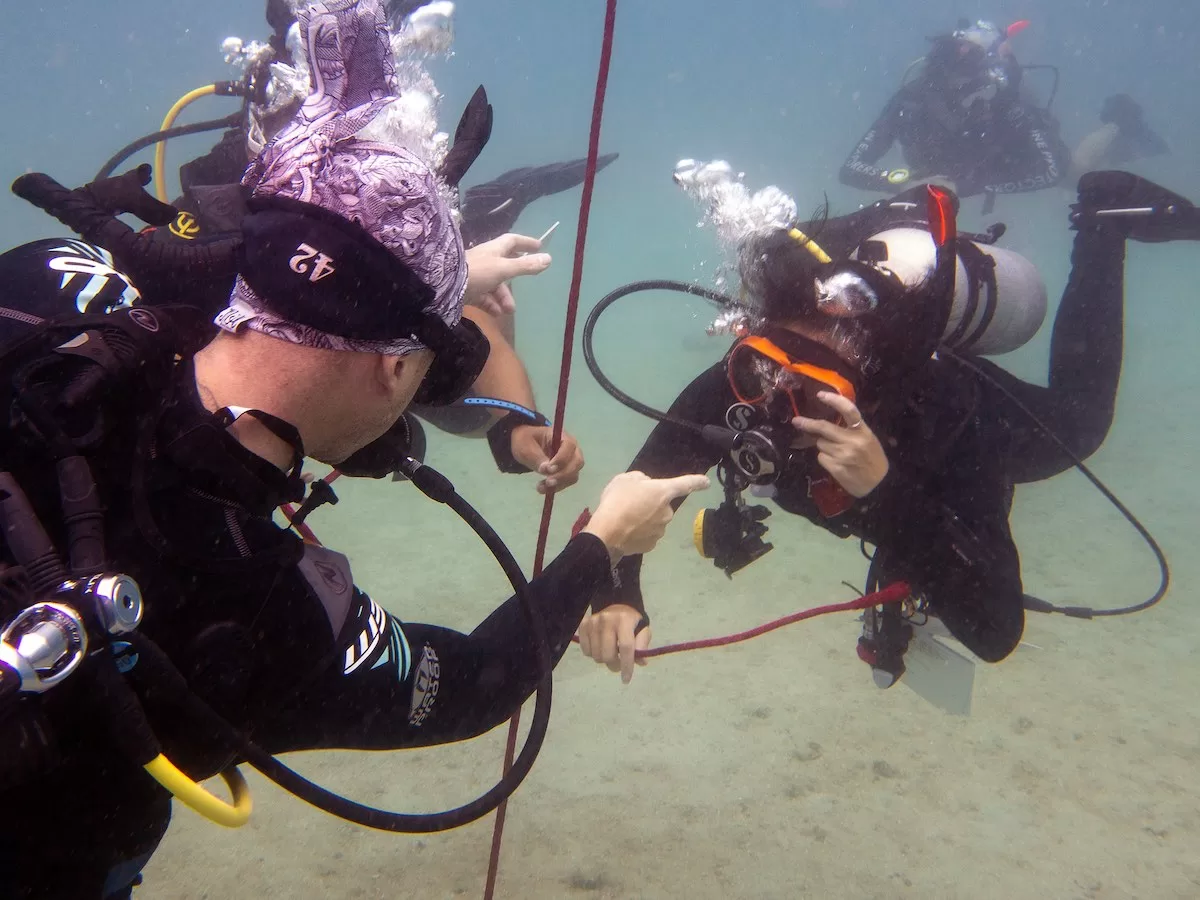
If there’s one thing we know about underwater search and recovery, it’s that things rarely go exactly according to plan! As dive pros, we’re always looking out for safety first. Getting wiped out or overexerting yourself—especially when you’re deep down—is a quick way to burn through your air and raise your decompression risk. That’s why a Divemaster’s best friend isn’t brute force; it’s all about clever, tactical preparation.
And guess what one of the ultimate tools in your dive kit is? Knot tying! It’s a super fun, foundational skill that often gets overlooked, but it totally changes the game when it comes to solving problems under pressure.
Whether you’re wrestling with an awkward ghost net to secure it to a lift bag, re-tying a loose mooring line on the boat, or anchoring gear for a cool new conservation project, there is a perfect knot engineered for every single challenge. It really is a superpower for scuba divers!
During the PADI Divemaster program, candidates are trained in seamanship and ropework, focusing heavily on three foundational knots:
- The Bowline: Essential for forming a secure, fixed loop at the end of a line that will not slip or tighten under a heavy load.
- The Sheet Bend: The industry standard for reliably joining two ropes of unequal diameters together.
- The Two-Half Hitch: Ideal for quickly and securely mooring a line around a post, ring, or structural anchor point.
By mastering these three versatile knots, a Divemaster transforms from a basic guide into a highly capable asset on any dive vessel or project team. Furthermore, dedicating time on the surface to practicing advanced knot-tying layouts ensures that when a complex rigging scenario presents itself at depth, execution is seamless, efficient, and above all, safe.
Divemaster Deep Dive Scenario
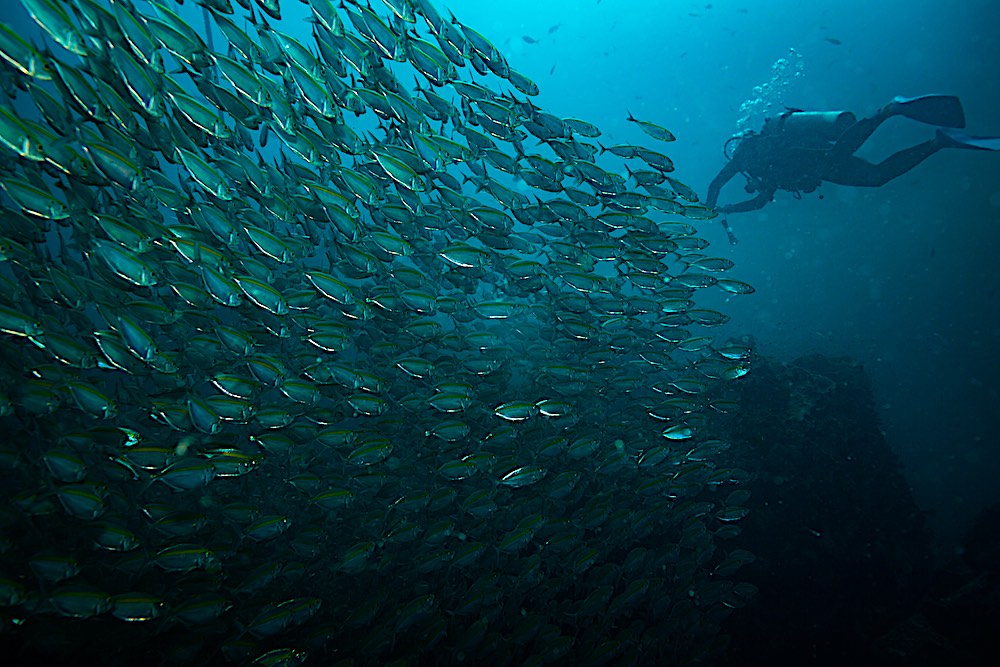
Venturing into the abyss is a massive thrill for countless explorers! The lure of shipwrecks, plunging reef walls, and hidden underwater realms offers an incredible sense of adventure that few ever witness. As a dive pro, you’ll lead enthusiasts who crave these deeper mysteries, making it vital to approach every descent with absolute preparation and focused situational awareness to keep things safe and fun.
Running the show at depth requires pulling back the curtain on complex logistics to ensure everyone feels confident. During your Divemaster training, you’ll master the “behind-the-scenes” physics and physiology, from managing nitrogen narcosis to tracking elevated gas consumption. Understanding these factors is a foundational pillar for making split-second decisions and overseeing diver performance when the pressure is on.
Gaining real-world experience in deep-sea scenarios transforms you into a highly versatile, well-rounded leader. Through focused practice, you’ll learn to anticipate challenges before they start, reinforcing the high standards that define the scuba diving industry. Ultimately, your expertise allows you to deliver smooth, controlled adventures that inspire the next generation of deep-sea explorers.
Exploring deep wrecks is a thrill, but it takes careful planning. You’ll learn how to manage the unique factors of deep diving protocols, like air supply and decompression, so your group stays safe and has the time of their lives.
Divemaster Deep Diving
Your journey through PADI Divemaster training is a deep dive into professional growth, sharpening you as a diver and technical problem-solving while you master the art of leadership. Throughout this four-week adventure, you’ll refine your underwater presence, tackling everything from logistical site setups to detailed mapping and deep-dive scenarios. Every challenge is carefully crafted to transform candidates into the dependable, versatile pros the industry needs. This hands-on toolkit doesn’t just prepare you for a career; it gives you the confidence to guide others through the wonders of the abyss. You’ll emerge as a powerful voice for our oceans, as the course fundamentally shifts your environmental perspective and eco-awareness. Becoming a PADI Divemaster is about so much more than just a new card in your wallet—it’s about joining a community of passionate explorers dedicated to protecting the blue planet we love.
Become a PADI Divemaster on Koh Tao
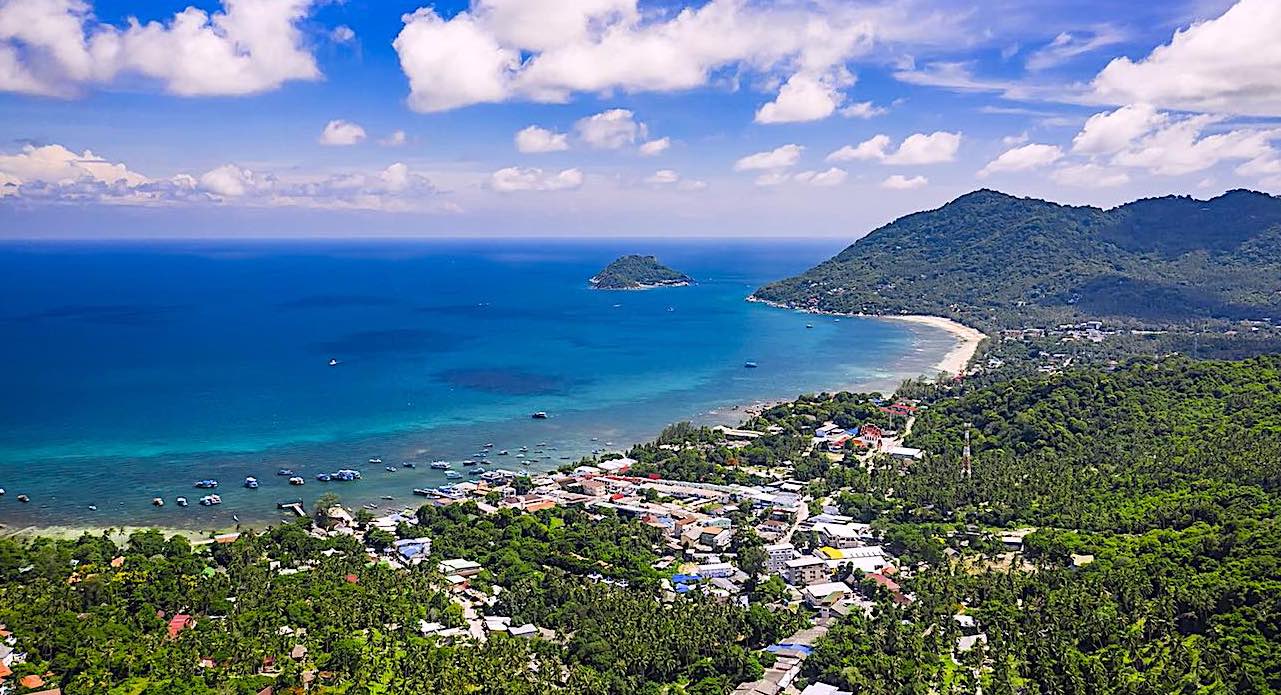
Koh Tao holds the title of the world’s most popular location for certifying scuba divers.
Koh Tao Dominance in PADI Scuba Diving Certifications
Quantity: It’s a fact that more scuba diving certifications are issued on Koh Tao than anywhere else globally. This is a significant claim, and Koh Tao backs it up with safety, numbers and popularity.
What Makes Koh Tao So Popular?
- Cost-Effective Learning in Koh Tao
- The island provides some of the most globally competitive pricing for scuba diving education, making it a top choice for travelers on a budget.
- Beyond course fees, the general cost of living and accommodation on Koh Tao is typically more affordable than in other major diving hubs.
Perfect Diving Environments
- Beginners find Koh Tao ideal due to its calm, warm waters and superb visibility.
- Consistent conditions are provided by a tropical climate that lasts all year.
- The island features diverse locations for every skill level, ranging from shallow reefs to deeper wrecks.
Easy Access to Koh Tao
Even though it’s an island, getting here from Bangkok is a breeze! The travel infrastructure is great, making it easy for you to start your adventure.
Vibrant Social Scene
Koh Tao is famous for its vibrant, fun atmosphere! It’s easy to meet fellow divers and make lifelong friends. Despite the great prices, our schools maintain amazing training standards with experienced instructors who love what they do. Between the great weather, the affordability, and the social vibes, Koh Tao really is the king of diving destinations!
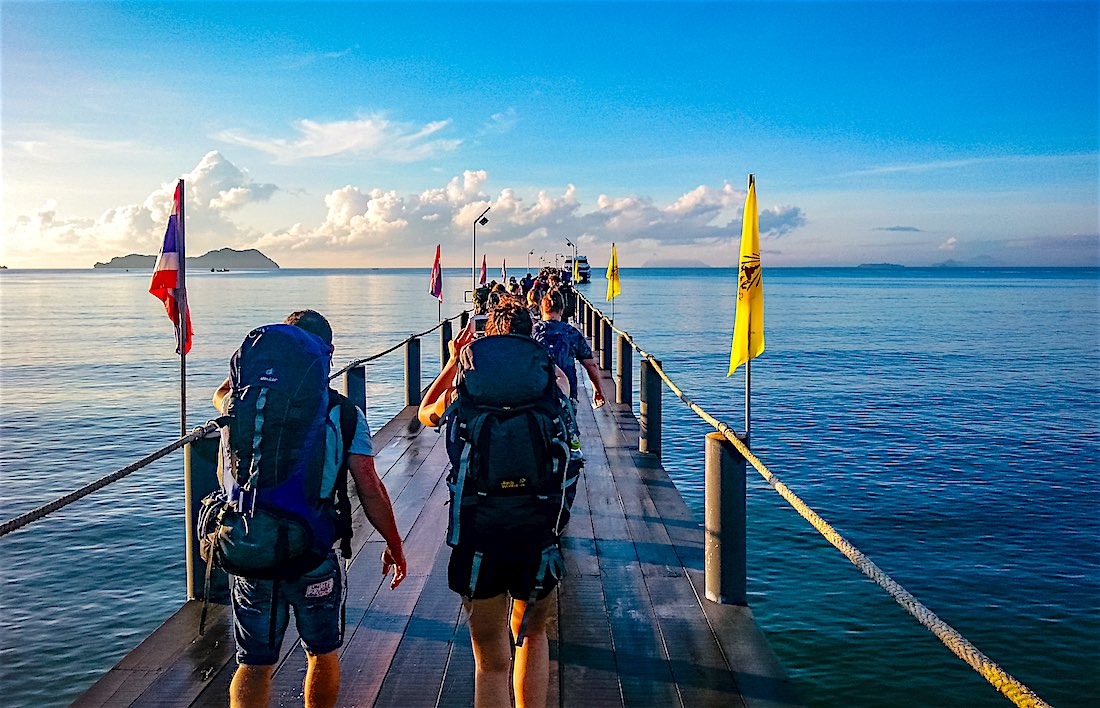
How to Get to Koh Tao from Bangkok
Ready to travel? Getting to Koh Tao involves a mix of land and sea. Here are some of the best routes to Koh Tao:
Flight & Ferry
- Fly from Bangkok (Don Mueang Airport – DMK or Suvarnabhumi Airport – BKK) to:
- Koh Samui (USM): This is the closest airport to Koh Tao. Bangkok Airways operates frequent flights.
- Chumphon (CHT): Thai AirAsia and Nok Air offer flights to Chumphon.
- Surat Thani (URT): Thai AirAsia and Nok Air also fly to Surat Thani.
Once you land, just hop on a ferry to Koh Tao. This is the quickest way to get the sand between your toes!
- Check ferry schedules to align with your flight arrival.
- Koh Samui flights are usually more expensive than Chumphon or Surat Thani.
- Be mindful of baggage allowances, especially with budget airlines.
- Allow ample time between flight arrival and ferry departure.
Bus & Ferry
Take a bus from Bangkok (usually from near Khao San Road) to:
- Chumphon
- Surat Thani.
After your bus ride, grab a ferry to the island. It’s a classic traveler route!
- This is a popular and budget-friendly option.
- Overnight buses are available, saving on accommodation costs.
- Lomprayah High Speed Ferries are often recommended for their speed and comfort.
- Busses can be long journeys, so prepare for that.
- Book combined bus and ferry tickets for convenience.
Train & Ferry
Take a train from Bangkok’s Train Station to Chumphon. From Chumphon, take a ferry to Koh Tao. Things to Consider:
- This is a more relaxed and scenic option.
- Sleeper trains are available for overnight travel.
- Book train tickets in advance, especially for sleeper berths.
This is a wonderful way to see the beautiful Thai countryside as you head towards the coast.
Car & Ferry
Driving gives you total freedom! Just park at the pier and let the ferry take you the rest of the way.
- This offers flexibility, but driving in Thailand can be challenging.
- Long driving distances.
- Parking fees at the pier.
- Ferry companies may have limitations on vehicle transport (if you were thinking of taking your car to the island itself, which is not commonly done).
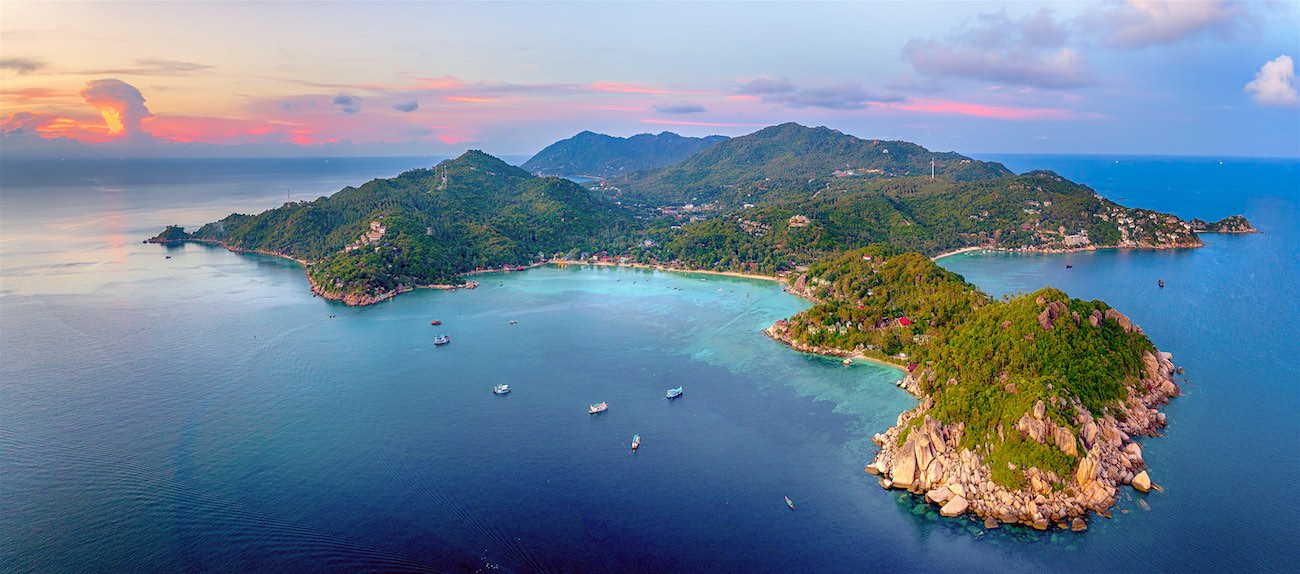
Key Planning Considerations
- Time of Year: The weather in the Gulf of Thailand can vary. Check the forecast before you travel.
- Booking in Advance: Especially during peak season, book flights, trains, and ferries in advance.
- Ferry Companies: Research ferry companies (Lomprayah and Songserm are common) and their schedules.
- Travel Time: Factor in travel time, including transfers between modes of transport.
- Budget: Compare the costs of different travel options.
- Travel Insurance: Ensure you have adequate travel insurance.
Ready to start? Contact us for all the details on diving course prices at Black Turtle Dive. We’re known for our great service and making sure you have a blast while learning. We can’t wait to see you on Koh Tao!

What is the Cost of a PADI Divemaster Course
Compare Prices for Diving Courses in Koh Tao
BOOK COURSES – PRICES